Wednesday, October 29, 2008

Need Some Halloween Ideas for Your Latin Classes?

In addition to last year's Halloween ideas for Latin classes, here are a few more...

You might consider exploring the Latin of Harry Potter. Ginny Lindzey shows the Classical connection in Just Charming: Tapping into the Latin Magic of Harry Potter.

Michael Myer, Magister Lingua Latinae at Heathwood Hall Episcopal School, has some fun materials to share with you on his class website, including a list of the parts of the body (Partes Corporis) that can be used for playing Simon (or Caesar) Says, plus the lyrics to Illa Ossa (sung to the tune of 'Dem Bones').

For those of you who use Professor John Traupman's Latin Is Fun, Book 1 as a textbook or supplement, there is a scary Monstrum in Chapter 12 as well as a wonderful skit about the legendary Roman scientist Dr. Franciscus Frankenpetrus.

Dr. Melissa Schons Bishop has organized a Halloween activity kit which can be purchased at her new store, Creative Classical Curriculum. With up to three days of material for each class, "Horrible Haunted Halloween Horror" includes readings and activities for all four levels of Latin based upon authentic Latin texts: a haunted house story by Pliny for Latin I, the werewolf story from Petronius for Latin II, Lycaeon's metamorphosis into a wolf from Ovid for Latin III and Aeneas descent into the Underworld from the Aeneid for Latin IV. Each selection is accompanied by magic vocabulary lists and active learning followups. Dr. Bishop also includes two complete games Monster Bingus and the Underworld Game. The kit may be downloaded for $40 -- keep in mind that it can printed out and used for years. Also available and suitable for Halloween is "Gross Roman Facts."

Even More Latin Teachers in the News!

According to the Pioneer Press in Minneapolis-St. Paul, "students in Minnesota are clamoring to take Latin classes!" Read Metro Schools Giving Latin Language New Life. (Link no longer active.)

Tbe Fort Myers News-Press (October 29, 2008) reports on a winter resident who teaches Latin via long distance to students in Connecticut in South Fort Myers snowbird teaches long-distance Latin.

Monday, October 27, 2008

How to Cheer for the Philadelphia Phillies in Latin!

This is for the baseball fans who are following the World Series! Latin teacher and baseball fan Dennis McHenry II of Allentown High School, NJ, has composed the following cheers for supporters of the Phillies!

iō Philadelphiam! (Yo Philly!)
iō Philadelphias! (Yo Phillies!)
iō Philadelphenos! (Yo Philly (guys)!)

According to The Bantam New College Latin & English Dictionary, Revised Edition (Third Edition, John Traupman, 2007), iō is an interjection "(expressing joy) ho! hurray!" or "(in a sudden call) yo!"

Dennis felt that "'yo' ... seems natural in Philly." He further explains that this cheer "uses the exclamatory accusative. Philadelphenus,-a, -um is the adjective used in Latin for the people of ancient Philadelphia. This last one could refer to the players or the fans." Dennis recommends the second option, stating, "I think I like 'iō Philadelphias!' the best."

(For those of you who want to know precisely what an Exclamatory Accusative is, George Lane's Latin Grammar for Schools and Colleges explains that this type of accusative is used to call attention to something. It can occur with or without an interjection. Common interjections used with the Exclamatory Accusative are: heu, eheu, pro, iō, etc.)

Latin Teachers in the News!

A very recent article in the Delta Democrat Times of Greenville, MS, showcases Simmons High School's energetic Latin teacher Austin Walker and his bright and ambitious students. Read Hollandale Students Learn Roman Empire's Language.

Students in inner-city Hackney and other disadvantaged London (UK) boroughs are learning Latin, thanks to the Iris Project and Classics students from University College London and Kings College London. You can read more about this project at the Daily Telegraph in Latin, the Language of Literacy.

Illinois Latin Teacher Brian Tibbets (Monmouth-Roseville High School), has been featured in this week's Galesburg Register-Mail (October 20, 2008) after being awarded the Illinois Classical Conference Latin Teacher of the Year award. Read Latin is Not a Dead Language at MRHS.

Rocktown Weekly has a wonderful story entitled Rident Stolidi Verba Latina ("Fools Laugh at the Latin Language") (Link no longer active) highlighting the elementary school Latin classes taught by Arthur Rogers at Redeemer Classical School in Virginia.

Tuesday, October 21, 2008

Pretty Soon Everyone Will Want to Learn Latin!

Scotland's Education Minister Fiona Hyslop is calling for Latin to be reintroduced in Scottish schools, according to Scotland on Sunday (October 19,2008). The article indicates that there is a great deal of support for breathing new life into the Classics in Scotland, though there are the usual worries regarding funding and teacher preparation and availability. While many of the arguments are the usual utilitarian ones (grammar, literacy), Latinists will be happy to know that many of the educators and politicians are advocating Latin because it is interesting to young pupils!

Sunday, October 19, 2008

Learning Latin is In Because Latin Teachers are Cool!

So says US News and World Report (October 17, 2008), which reports that "dynamic, enthusiastic educators might actually be the key to the language's surging popularity."

Latin is undoubtedly becoming more and more popular because the quality of teaching is high, the methodology varied, and the content rich, rigorous and relevant. Latin teachers are working hard to inspire and educate their students -- by educating themselves through attendance and participation at American Classical League Institutes and Workshops, conversational Latin Conventicula (several listed here which occur annually and have proven so popular that there are often waiting lists), blogs, online discussions, webinars, increased teacher recruitment, and inspired graduate level training. Then they bring what they've learned into the classrooms. Latin teachers don't always agree upon the best way to teach Latin. There are often spirited disagreements, but this is just evidence that they are continually thinking about ways to expand and improve their teaching skills.

Read Latin Surges in Popularity in the On Education section of this week's magazine online.

Saturday, October 18, 2008

Latin by the Sea: University of Massachussetts Latin Seminar

This announcement just arrived this morning: The Conventiculum Bostoniense "is a full-immersion residential experience sponsored by Classics Department of University of Massachusetts at Boston, specifically designed for teachers in schools and universities, who want to gain some ability to communicate ex-tempore in correct Latin on a wide range of subjects. Two different graduate level courses are offered during the Conventiculum, one for first time attendees and the other for returning participants or those who already have experience with Latin as a communicative language. Days are filled with instructional activities, including sessions focused on oral expression or prose composition, opportunities for social interaction."

The faculty includes Jacqueline Carlon, Assistant Professor of Classics at UMass Boston; Emily McDermott, Professor of Classics at UMass Boston; Milena Mikova, Associate Professor of Classics at the University of Kentucky; and Terence Tunberg, Professor of Classics at the University of Kentucky.

The Conventiculum website provides further information about the Conventiculum Bostoniense, including available course descriptions as well as videos.

Wednesday, October 15, 2008

What DID the Romans use for Toilet Paper?

Caroline Lawrence answers that question -- and a few others -- on the Roman Mysteries blog. (Unfortunately, the contest to win the prestigious Golden Sponge-Stick award isn't open outside the United Kingdom. Maybe someday...)

Sunday, October 12, 2008

Latin Still Lives at the New York Times

In this weekend's New York Times, Maureen Down asks "Are We Rome? Tu Betchus!" She seems to be saying "Gratias tibi ago, sed non gratias tibi ago" to the self-indulgence of the past decade and invokes somber and serious Stoicism. Maureen Dowd Latinam amat, so she asked Gary D. Farney to translate her editorializing about our current situation, "The Battle of Gall" (a pun on Caesar's Gaul, of course) into Latin.

Tuesday, October 07, 2008

Latin Lives in the New York Times!

There's actually some good news in today's newspaper! Read about "A Dead Language That's Very Much Alive" in today's New York Times -- enrollments are up, students are taking the National Latin Exam, and there's even some Latin conversation going on in the classrooms!

Friday, October 03, 2008

News for Novice and Experienced Speakers of Latin

From Nancy Llewelyn, President of SALVI (the Septentrionale Americanum Latinitatis Vivae Institutum, otherwise known as the North American Institute for Living Latin Studies) comes the news that there will be two Rusticationes Virginianae in West Virginia in 2009! One Rusticatio will be for novice and beginning speakers of Latin only, while the other will be for everyone, including more experienced conversationalists. Registration information hasn't been published to the SALVI website yet but it will be similar to previous Rusticationes, which you can read about at http://www.latin.org. Keep checking SALVI as there should be more news in about a month or so. (Gratias tibi ago to Robert Patrick for sharing this!)

Read about John Piazza's experience at the 2003 Rusticatio California.

Latin Declension and Conjugation Review Sheets

Homeschooling mom Angelina from Louisiana has posted a schedule of lesson plans for the Latina Christiana curriculum as well as some handy declension and conjugation review sheets on her blog Permanent Things.

Latin Teacher Breathes Life into a Dead Language

Maryland Latin teacher Ruth Ann Besse was recently profiled in her local newspaper, The Gazette. Ruth Ann began teaching Latin in 2002 to her son, but now teaches "part-time" at a local school as well as to a co-op class of homeschoolers. (She's really much too busy to be described as a "part-time" Latin teacher.) Ruth Ann also serves as a North American points of contact for the Primary Latin Project, which promotes the Minimus Latin course, a popular British series. Read more about Ruth Ann and her experiences as a Latin teacher in The Gazette's profile of this energetic teacher (August 28, 2008).

Friday, September 26, 2008

New Games at FreeRice!

FreeRice.com, in partnership with the Berkman Center for Internet & Society at Harvard University and the United Nations World Food Program, is an educational website that donates rice to the UN Program to End World Hunger. The way it works is that everytime you answer a question correctly, FreeRice's sponsors donate 20 grains of rice to help feed the starving and hungry.

Help end world hunger

FreeRice has been around for a while and started out with only an English vocabulary game. Recently, more games have been added: art, chemistry, geography, and math, English grammar, and language learning (French, German, Italian and Spanish.) Unfortunately, there's no Latin game yet, but your knowledge of Latin grammar and vocabulary will definitely help you with the English grammar and vocabulary games!

Register Now for the Medusa Mythology Exam 2009!

Registration is now open for the Medusa Mythology Exam 2009. An international competition for mythology enthusiasts, any student in grades 6-12 is encouraged to enter. No knowledge of Greek or Latin is required. According to the website, the Medusa Mythology Exam committee encourages English and homeschoolers to enroll interested students. Prizes include certificates of honorable mention, gold and silver medals, and there are cash scholarships for the highest honors. This exam is approved by the Contests & Activities Committee of the National Association of Secondary School Principals.

Each year a theme is set. This year focuses on "Adventures on the High Seas: Stories and Characters of Jason and the Argonauts: Theseus, Aeneas, and Odysseus."

Cost per student is $3.00. There is a $15 school fee. The test is administed by the teacher and should take place during the week of March 23-27. With prior arrangement, teachers can administer the test earlier if there is a spring break conflict.

The deadline for registration is February 14 (Valentine's Day), 2009.

For more details, visit the Medusa Mythology Exam 2009 website. There you will find downloadable registration forms and schedules, syllabi, sample exams, certamen (quiz bowl) questions, online practice tests, book suggestions, study questions and past results.

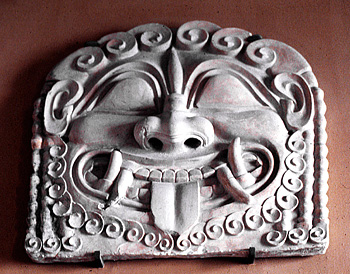
Marble relief of Medusa from Greek temple in Syracuse. Photo by Barbara McManus. Courtesy of VRoma.

Tuesday, September 23, 2008

Bolchazy's Fall Webinar Schedule Announced

Bolchazy-Carducci has just announced their fall Webinar schedule. Designed for busy Latin teachers, attendees of these interactive online seminars can converse with each other and the speakers, view presentations, and explore teaching materials used by the speakers -- all from the comfort of home. Each webinar lasts for 2 hours with a mid-point break.Tuition for each session is $99. A subscription for all 3 can be purchased for $249. Many school districts will accept participation in these Webinars as fulfillment of required continuing education credits. (Check with your school district or department of education before enrolling.) Visit Bolchazy-Carducci for details about each webinar as well as registration instructions.

October 16, 4-6 pm EST (3-5 CST) "Oral Interpretation of Latin Poetry: The Delight of Latin Aloud" Robert P. Sonkowsky, University of Minnesota, Emeritus Professor of Classics.

October 21, 7-9pm EST (6-8 CST) "Unlocking Catullus" LeaAnn Osburn, Emerita Latin Teacher and Helena Dettmer, University of Iowa.

November 6, 3-5 EST (2-4 CST) "The Pleasures of Teaching Lucretius" Bonnie Catto, Assumption College.

Friday, September 19, 2008

Mark Your Calendars!

According to Yahoo! News, German radio station Kiss FM will be broadcasting entirely in Latin for part of the day on September 26th!

Save the Medieval Latin Department at the University of Heidelberg!

Sign the petition seeking to save the Department for Medieval and Neo-Latin Philology (Seminar für Lateinische Philologie des Mittelalters und der Neuzeit in Heidelberg) from closure!

Pompeii and the Roman Villa, National Gallery of Art, Washington DC

If a trip to Italy to visit the ancient cities of Pompeii and Herculaneum is too expensive this year, consider taking a trip to our nation's Capitol, Washington D.C., where the National Gallery of Art will be hosting an exhibition entitled Pompeii and the Roman Villa: Art and Culture Around the Bay of Naples from October 19, 2008-March 22, 2009.

By the way, the National Gallery of Art has a wonderful online lesson plan for teachers and parents interested in introducing students to Greco-Roman art, Greco-Roman Origin Myths, which includes an interactive presentation of great works of art with clickable images, student activities, downloadable worksheets, related links, a glossary and more. Don't forget to try out NGAClassroom's Ancient Arcade game too!

Photo of a street in Pompeii with Mount Vesuvius in the background courtesy of Vroma.org. Note the stepping stones so that inhabitants of the ancient city could cross the street without getting their feet and shoes messy.

Saturday, September 13, 2008

Free Classical Podcasts - Archaeology, Myth and History

Texas Christian University archaeologist Jennifer Lockett, also known as "Indiana Jen," has published 3 enhanced podcasts and syllabi on Itunes: Introduction to Classical Mythology, The Ancient City of Rome, and Classical Archaeology. These are podcasts include slideshows -- if you have an Ipod capable of displaying video, you can see the slides while Dr. Lockett lectures. Of course, you don't need to have an Ipod to enjoy these podcasts -- and the accompanying slides -- if you have a current enough version of Itunes installed on your computer. You can watch and listen on your computer.

(Itunes is a free download and available for both Macintosh and Windows.)

You can find descriptions and links to each of the podcasts at Indianajen.com

(Gratias tibi ago to the ARLT Weblog for pointing these podcasts out!)