The exam will be administered in November 2011. To register visit http://quia.com/nceeorder. There is a school registration fee of $15 ($25 outside of the United States) in addition to the $3 per student exam fee. Schools that have an NJCL chapter receive a $10 discount on the school registration fee. The payment deadline is November 1, 2011. For additional details visit the National Junior Classical League.
Showing posts with label Examinations. Show all posts
Showing posts with label Examinations. Show all posts
Thursday, September 29, 2011
National Classical Etymological Online Exam
There's still time to register for the National Classical Etymology Online Exam, but the October 15th deadline is quickly approaching. The National Claassical Etymology Online Exam is sponsored by the National Junior Classical League.


Friday, January 22, 2010
Prepping for the National Latin Exam
Karen Moore at the Latin Alive! blog just posted a link to a new online prep test program to help students prepare for the Level 1 National Latin Exam.
Wednesday, October 28, 2009
C.I.C.E.R.O.
C.I.C.E.R.O. is an acronym that used to stand for for Certamen in Concordiam Europam Regionum Omnium ("A Competition to Promote Harmony in All Areas of Europe") but due to the expansion beyond Europe into Tunisia and Australia (see the breaking news regarding this development on the ARLT Weblog), C.I.C.E.R.O has now gone international and the acronym now stands for Certamen in Concordiam Europam Regionumque Orbis ("A Competition to Promote Harmony in All Areas of Europe and the World".) The C.I.C.E.R.O. competition is a challenging translation competition for "Sixth Form Classicists." (To translate this for Americans, students in the European "Sixth Form" would be high school juniors and seniors stateside.)
Visit the official C.I.C.E.R.O. site to find out more about this competition, which has the patronage of of the Secretary General of the Council of Europe. Do be aware that the site hasn't been updated to reflect the international status of the competition yet. For the latest breaking news, you will want to visit the CiceroCertamen Channel on Youtube.
Tuesday, October 27, 2009
One More Deadline! Coming Soon!
Applications for the The Classical Association of the Middle West and South's 2009 Translation Contest are due this Friday, October 30, 2009.
(The unofficial word is that they will likely forgive you if you get your registration in a day or two late...)
View a list of other Classical contests!
View a list of other Classical contests!
Monday, October 26, 2009
Make that Deadline This Year!
APPROACHING DEADLINES
There's Still Time!
Latin Reading Contest
(United Kingdom-only, I assume. I didn't notice a deadline.)
http://arltblog.wordpress.com/2009/10/24/arlt-reading-competition-2010/
(United Kingdom-only, I assume. I didn't notice a deadline.)
http://arltblog.wordpress.com/2009/10/24/arlt-reading-competition-2010/
Edited to Add another Contest... Applications for the The Classical Association of the Middle West and South's 2009 Translation Contest are due this Friday, October 30, 2009. (The unofficial word is that they will likely forgive you if you get your registration in a day or two late...)
Golden Sponge Stick Mystery Story Writing Contest
http://flavias.blogspot.com/2009/08/golden-sponge-stick-comp-09.html
Open internationally this year, still open for entries, but the December 10, 2010 entry deadline is approaching.
Phaedrus Latin Contest
http://www.phaedruslatincontest.org/index.php
Entries due March 1, 2010, but you need to sign your students up before the end of 2009 calendar year.
National Mythology Exam
http://www.etclassics.org/nme.html
Deadline: January 15, 2010
http://flavias.blogspot.com/2009/08/golden-sponge-stick-comp-09.html
Open internationally this year, still open for entries, but the December 10, 2010 entry deadline is approaching.
Phaedrus Latin Contest
http://www.phaedruslatincontest.org/index.php
Entries due March 1, 2010, but you need to sign your students up before the end of 2009 calendar year.
National Mythology Exam
http://www.etclassics.org/nme.html
Deadline: January 15, 2010
Classical Literacy Exam
No Latin required, but will include some memorized phrases and mottoes.
http://abqlatin.com/classical-literacy-exam
Deadline: January 15, 2010
National Latin Exam
Medusa Myth Exam
http://www.medusaexam.cjb.net/
Deadline: February 13, 2010
Exploratory Latin Exam
http://www.etclassics.org/ele.html
Exams may be administered at any point between October 1, 2009 and April 1, 2010. Teachers must return completed exams within one week after each administration. Results from all exams, regardless of administration date, will be sent in May 2010.
ACL Poster Contest
http://www.aclclassics.org/Institute/2009/Poster.aspx
Bernice Fox Writing Contest
http://department.monm.edu/classics/Department/FoxContest
No Latin required, but will include some memorized phrases and mottoes.
http://abqlatin.com/classical-literacy-exam
Deadline: January 15, 2010
National Latin Exam
National Greek Exam
Deadline: January 19, 2010
Medusa Myth Exam
http://www.medusaexam.cjb.net/
Deadline: February 13, 2010
Exploratory Latin Exam
http://www.etclassics.org/ele.html
Exams may be administered at any point between October 1, 2009 and April 1, 2010. Teachers must return completed exams within one week after each administration. Results from all exams, regardless of administration date, will be sent in May 2010.
LINKS TO LAST YEAR'S CONTESTS
Already awarded in 2009
Awaiting New Announcements for 2010
ACL Poster Contest
http://www.aclclassics.org/Institute/2009/Poster.aspx
Bernice Fox Writing Contest
http://department.monm.edu/classics/Department/FoxContest
Updated to Add the C.I.C.E.R.O. competitionand the Terence Awards sponsored by Bolchazy-Carducci
Sunday, September 06, 2009
Classical Literacy Exam
News of a new competition, the Classical Literacy Exam, sponsored by the Albuquerque Academy Latin Honor Society, was recently carried in Torch, the official quarterly magazine of the National Junior Classical League. The Classical Literacy Exam is open to students everywhere and will require no specialized knowledge of the Latin language. Exam topics include Classical mythology, history, culture, some vocabulary derivatives, Latin phrases and abbreviations, and literature. The main emphasis is on Roman civilization, but there will be a few questions about Greek civilization and culture (eg. terms such as agora, Parthenon, and Acropolis on Level I and some brief philosophical references on Level II and III.)
According to Hugh Himwich, who is directing this new initiative, the guiding principle is "to include everything that an educated person should know about the Classical world, even if they unfortunately have never had a Latin class." Of course, if they have studied Latin, "the CLE will be a reward and a delight." There are three levels to the examination.
Contact the exam sponsor to be put on the mailing list to receive an application and study guide. The target for administering the exam is the first week in February (but there is some flexibility for schools that need an alternative date.) Award certificates will be sent in March as well as school book awards for outstanding participation and achievement.
Teachers will grade their own tests and send the results to the CLE headquarters.
According to the advertisement in the Torch, the cost for the exam is fifty cents per student. The format is fill-in-the-blank with the term that matches the definition. The application deadline is January 15, 2010.
The Classical Literacy Exam website is currently under construction and more information is forthcoming soon, so keep checking back for complete details to be posted in the next few weeks.
Thursday, June 11, 2009
Julius Caesar Vicit!
Venit, vidit, vicit! (He came, he saw, he conquered!)
Dust off your copies of De Bello Gallico and/or De Bello Civili! (No word yet as to which of Caesar's commentaries.)
According to a recent post to the AP-Latin discussion list, the Advanced Placement Latin Development Committee has announced its plan to create a new two-author AP poetry and prose Latin Literature course. Vergil's Aeneid will remain on the syllabus, but apparently the required number of lines will be reduced. The new prose author will be Caesar.
(The previous syllabus included the poets Ovid, Catullus, Horace and the prose author Cicero in various combinations, in addition to the Vergil exam. The Ovid/Catullus/Horace/Cicero syllabus was discontinued earlier this year.)
Caesar is generally read before Vergil, and was traditionally taught in the second semester of the second year in American high schools especially during the mid-20th century. The Classical Investigation of 1924 prescribed the Caesar-Cicero-Vergil sequence. Many 21st century Latin teachers have preferred not to teach Caesar, for various reasons and many modern textbook series generally don't include very much of his writing. (Caesar tends to show up more often in grammar-based textbook series.) Some object to his focus upon war. Others find him boring. Many believe that Caesar is especially unappealing to their female students. On the other hand, Caesar's writings are definitely easier to read than Cicero's and many introductory prose composition and English-to-Latin translation courses have been based on Caesar. Teachers who want to promote spoken Latin in the classroom may find it easier to discuss Caesar's works in Latin than Cicero's. (Caesar's commentaries resemble "blog posts" from the front, while Cicero's orations often employ many rhetorical devices within a complicated sentence structure.)
Alea iacta est! (The die is cast.) Here are some resources for the teaching of Caesar for those of you who want to get a head start.
Also, check out T.J. Howell's Caesar Classroom resource for some imaginative ideas.
Macquarie University in Australia hosts an outstanding numismatic site, The Coinage of Julius Caesar.
See previous Latinteach blog entries referring to Caesar.
Statue of Caesar Courtesy VRoma.org
Wednesday, January 28, 2009
CICERO Competition 2009 in Europe
The third annual CICERO Competition (Certamen in Concordiam Europae Regionum Omnium) for European Sixth Form Classics students will take place on Saturday, March 21, 2009 in France and the United Kingdom, and on Friday, March 27, 2009, in the nations of Italy, Spain, Andorra, Belgium and Hungary. For full details provided in a variety of languages, visit the official homepage at http://www.ciceroeuropa.eu/.
Monday, December 29, 2008
2009 National Mythology Exam
If you haven't registered for the 2009 National Mythology Exam, the deadline is fast approaching. The National Mythology Exam is sponsored by ETClassics, Excellence Through Classics, a standing committee of the American Classical League. Forms are due on January 15, 2009 and a study bibliography will be sent upon registration receipt.
The National Mythology Exam is a multiple choice exam designed for grades 3-9. It is also open to students in grades 10-12. Many English, art, social studies and history teachers include this exam as part of their yearly curriculum. The NME consists of a 30-item basic exam plus additional sub-tests, based upon the student's grade level. Visit the ETClassics website for complete information, including sample test questions, packet previews, internet resources, and much more!
ETClassics also sponsors the Exploratory Latin Exam, which closes its registration on March 1, 2009.
The National Mythology Exam is a multiple choice exam designed for grades 3-9. It is also open to students in grades 10-12. Many English, art, social studies and history teachers include this exam as part of their yearly curriculum. The NME consists of a 30-item basic exam plus additional sub-tests, based upon the student's grade level. Visit the ETClassics website for complete information, including sample test questions, packet previews, internet resources, and much more!
ETClassics also sponsors the Exploratory Latin Exam, which closes its registration on March 1, 2009.
Friday, September 26, 2008
Register Now for the Medusa Mythology Exam 2009!
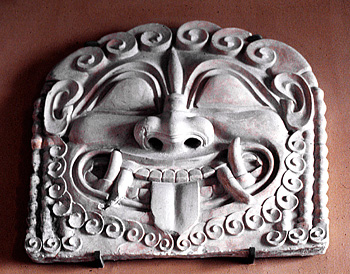 Registration is now open for the Medusa Mythology Exam 2009. An international competition for mythology enthusiasts, any student in grades 6-12 is encouraged to enter. No knowledge of Greek or Latin is required. According to the website, the Medusa Mythology Exam committee encourages English and homeschoolers to enroll interested students. Prizes include certificates of honorable mention, gold and silver medals, and there are cash scholarships for the highest honors. This exam is approved by the Contests & Activities Committee of the National Association of Secondary School Principals.
Each year a theme is set. This year focuses on "Adventures on the High Seas: Stories and Characters of Jason and the Argonauts: Theseus, Aeneas, and Odysseus."
Cost per student is $3.00. There is a $15 school fee. The test is administed by the teacher and should take place during the week of March 23-27. With prior arrangement, teachers can administer the test earlier if there is a spring break conflict.
The deadline for registration is February 14 (Valentine's Day), 2009.
For more details, visit the Medusa Mythology Exam 2009 website. There you will find downloadable registration forms and schedules, syllabi, sample exams, certamen (quiz bowl) questions, online practice tests, book suggestions, study questions and past results.
Marble relief of Medusa from Greek temple in Syracuse. Photo by Barbara McManus. Courtesy of VRoma.
Thursday, May 22, 2008
National Latin Exam Announces New Latin III Exam!
The National Latin Exam has announced a new Latin III exam for 2009. According to the most recent issue of the National Latin Exam Newsletter (Vol. XXIV, No. 2, Spring 2008) available at their website, next year's Level Three teachers will have three exams to choose from, based upon their students' own particular needs: Latin III-IV Prose, Latin III-IV Poetry, or the Generic Latin III Exam. According to the NLE Committee, this new exam "will strive to represent the middle ground between the Latin II exam and the Latin III-IV Prose exam." The NLE Committee has placed a copy of the proposed syllabus in the aforementioned newsletter and they are asking for feedback.
While you're visiting the NLE site and getting your own copy of the newsletter, make sure to spend some time checking out the rest of the site. You can download syllabuses and sample exams to help your students prepare for next year's tests and try out some practice questions.
The NLE site is also the official site for the Forum Romanum DVD series, which is a collection of Latin news shows based upon significant moments in Roman history, presented entirely in Latin. These videos allow students to experience Latin as a spoken language and learn about Roman history and geography in a realistic context. Students will probably not understand every word in the videos, but it's likely they will be able to follow along and comprehend the main points. The intention for beginning students is to hear the sounds of Latin, whereas intermediate and advanced Latin students will be more able to pick up the gist of what is happening and understand some of the language. A Companion Book to the Roman Forum, written by John Donohoe, who also plays the anchorman in the series, has been published and it contains scripts, worksheets and teaching hints to help you incorporate the series into your lessons. More information is available at the NLE site. Sample videos and excerpts from the scripts and supplementary activities are also available online for examination.
While you're visiting the NLE site and getting your own copy of the newsletter, make sure to spend some time checking out the rest of the site. You can download syllabuses and sample exams to help your students prepare for next year's tests and try out some practice questions.
The NLE site is also the official site for the Forum Romanum DVD series, which is a collection of Latin news shows based upon significant moments in Roman history, presented entirely in Latin. These videos allow students to experience Latin as a spoken language and learn about Roman history and geography in a realistic context. Students will probably not understand every word in the videos, but it's likely they will be able to follow along and comprehend the main points. The intention for beginning students is to hear the sounds of Latin, whereas intermediate and advanced Latin students will be more able to pick up the gist of what is happening and understand some of the language. A Companion Book to the Roman Forum, written by John Donohoe, who also plays the anchorman in the series, has been published and it contains scripts, worksheets and teaching hints to help you incorporate the series into your lessons. More information is available at the NLE site. Sample videos and excerpts from the scripts and supplementary activities are also available online for examination.
Tuesday, May 13, 2008
SAT II Subject Test in Latin?
Several Latin teachers have suggested the SAT II Subject Test for Latin as an alternative to the doomed Advanced Placement: Latin Literature exam. (Keep in mind that there are two AP Latin exams and the AP Latin Vergil exam is going to be continuing!) The SAT II Subject Tests are also administered by the College Board. The SAT II Latin test is intended to assess Latin language reading ability. You can read the specifics and view sample test questions at the aforementioned link.
Monday, May 12, 2008
Advanced Placement Latin Update
A few weeks ago Texas Latin teacher Ginny Lindzey wrote a letter to the Board of Trustees of the College Board with regard to the cancellation of the Advanced Placement: Latin Literature examination. (Remember, it is only the Latin Lit exam that is being cancelled. The AP Latin Vergil exam is not being cancelled! The College Board apparently wants just one capstone exam for each world language.) In this letter, Ginny seeks a moratorium on the cancellation and poses some thoughtful questions about the future of the examination and the A.P.-level Latin language curriculum. Ginny has received a response from Trevor Packer, the Vice President of the Advanced Placement program, which explains why a moratorium is not possible and gives some insight as to the future of world languages in the Advanced Placement program.
Friday, April 18, 2008
AP Latin Lit Meeting at CAMWS
The College Boards's recent cancellation of the Advanced Placement Latin Literature course and examination continues to be a major topic of discussion among Latin teachers. The 104th annual meeting of the Classical Association of the Middle West and South was held in Tucson this week and one of the evening sessions focused on the results of the 2007 Vergil and Latin Lit exams. Not surprisingly, there were many questions about how cancelling the exam will impact Classical education at the secondary and college level in the U.S. Andrew Reinhard of Eclassics attended the meeting and has an excellent un-official report and summary on his blog.
Friday, April 04, 2008
Washington Post Reports on Cancellation of Advanced Placement Latin Lit
The Washington Post is now reporting that the Advanced Placement Latin Literature course is being eliminated after the 2008-9 academic year, along with three other "underenrolled" subjects: Italian, French Lit and Computer Science AB.
The Latinteach list was abuzz with this news yesterday after current Advanced Placement Latin teachers started reporting that they had received the e-mail mentioned in the Post's news article.
Don't forget to sign Eclassic's on-line petition to save A.P. Latin Literature!
The Latinteach list was abuzz with this news yesterday after current Advanced Placement Latin teachers started reporting that they had received the e-mail mentioned in the Post's news article.
Don't forget to sign Eclassic's on-line petition to save A.P. Latin Literature!
Advanced Placement Latin Literature Cancelled?
Just this week, a number of Latin teachers received notification that one of the two Advanced Placement Latin exams, the Latin Literature exam, will no longer be offered . Only the Advanced Placement Vergil exam will be available for students. This has understandably caused a great deal of concern among Latin teachers across the United States. Many schools offer 2 years of A.P. Latin (either 3rd and 4th year Latin or 4th and 5th year.) Without a doubt, many Latin students continue their study of the language because they can take these college level courses in high school, simulataneously expanding their knowledge of Latin and the Classics, while also earning credit toward their college degrees.
Andrew Reinhard, who is director of Elearning at Bolchazy Carducci Publishers, has set up an on-line petition at Eclassics where you can add your name and voice your concerns.
Andrew Reinhard, who is director of Elearning at Bolchazy Carducci Publishers, has set up an on-line petition at Eclassics where you can add your name and voice your concerns.
Subscribe to:
Posts (Atom)