Friday, May 02, 2008

Graduation Gift Ideas for Latin Students and Classics Majors

It's the beginning of May and in a few weeks high school and university seniors will be graduating. Some Latinteach listmembers have been discussing ideas for farewell gifts. Here are a few suggestion :
  • Anima Altera has a wide range of Latin-themed products, including beautiful posters, prints, mugs, calendars, notecards, spiral journals, hats, t-shirts, sweats and more. Designed by Latin teacher, Ginny Lindzey, you are sure to find a wide range of wonderful presents. Sentiments that might be appropriate for grads include "Tempus Fugit" and "Carpe Diem," but there are many, many others. If you prefer simply writing a card, Ginny has a wonderful line of stationery too!
  • Amphora, the American Philological Association's outreach publication, includes "accessible articles written by professional scholars and experts on topics of classical interest that include language, mythology, history, culture, classical tradition, and the arts" as well as book, film and web site reviews. You can read back issues (through early 2007) on the website, but your students will undoubtedly enjoy receiving current print issues via subscription. A one year subscription (2 issues) is only $10 and your student will think of you when they find it in their mailbox. This is a particularly nice gift for students who may not be planning on continuing their classical education -- and for those who will. Who knows? You might want to get a subscription for yourself.
  • Gift Certificates and Cards are always nice -- and you can be sure the recipient gets exactly what he or she wants!
  • Membership in a Classical Assocation is also a thoughtful gift. Membership in the American Classical League or the previously mentioned American Philological Association would be a fantastic present for a recent university graduate or brand-new teacher, especially if he or she will be looking for a job. Both the ACL and APA have placement services for members. If your grad is already a member of a national association, consider one of the regional associations. Museum memberships are also great!
  • W.H. Adams Antiqarian Books is a small but enchanting brick and mortar bookstore specializing in Greek and Roman, Biblical, Middle Age, Renaissance, Reformation and 17th-19th century texts. You will receive individualized attention from this wonderful shop. This is the real deal, an old-fashioned antiquarian bookstore run by a small and attentive staff. Click on the link to see their online catalog.
Of course, it's the thought that counts and there are some free -- or very nearly free -- possibilities as well.

  • You could compose a certificate (in Latin, of course) for your graduates. If you know how to do calligraphy, you could hand letter it yourself. Otherwise, there are calligraphic artists who will design your certificate for a fee. You could, of course, use a nice font and print it out yourself!
  • Photographs from JCL inductions, award ceremonies or competitions.
Suggestions are welcome, especially ideas for free and nearly free farewell gifts. This list will be expanded.

Thursday, May 01, 2008

Wednesday, April 30, 2008

Tips for Reading Latin

Ginny Lindzey has designed some wonderful bookmarks with tips for reading Latin, based on Dexter Hoyos' book Latin How to Read it Fluently. Get your bookmarks at the University of Georgia's Latin SANDALS site (scroll down) -- and be sure to check out the other materials available there!

Developing Latin Language Reading Proficiency

Most teachers would agree that the best way to develop a skill is to practice -- a lot!

Latin teachers may differ in their teaching philosophies and styles, but the vast majority would concur that the best way to improve Latin reading comprehension is to read. Latin teachers who teach inductively will as a matter of course incorporate as much reading as possible. Even Latin teachers who teach the language deductively still expect their students to apply the grammar taught to reading and translating.

John Piazza has put together a wonderful selection of resources for teachers who want to increase the amount of extensive, comprehensible, content-rich (interesting!) reading resources for their students. Included you'll find An Introduction to Every Day Useful Latin, a work in progress by John Piazza and Robert Patrick.

Friday, April 18, 2008

Latin in the Parks

Those of you fortunate enough to be in London or Oxford this summer have the opportunity to enjoy the Iris Project's Latin in the Park lunch time sessions for adults and families. For only £1 pound sterling materials charge per session (about $2 USD), adults and families can learn some Latin and ancient culture. Bring a picnic and blanket and enjoy the sun and some Classical culture! RSVP and get more details at the Iris Project's website!

AP Latin Lit Meeting at CAMWS

The College Boards's recent cancellation of the Advanced Placement Latin Literature course and examination continues to be a major topic of discussion among Latin teachers. The 104th annual meeting of the Classical Association of the Middle West and South was held in Tucson this week and one of the evening sessions focused on the results of the 2007 Vergil and Latin Lit exams. Not surprisingly, there were many questions about how cancelling the exam will impact Classical education at the secondary and college level in the U.S. Andrew Reinhard of Eclassics attended the meeting and has an excellent un-official report and summary on his blog.

Thursday, April 17, 2008

Stephen Colbert knows some Latin!

Just last night the host of Comedy Central's Colbert Report, Stephen Colbert, led his audience in singing Happy Birthday to Pope Benedict XVI (words provided at the bottom of the screen for the home audience).

Pope's Birthday
The Colbert ReportMon - Thurs 11:30pm / 10:30c
www.colbertnation.com
Colbert Report Full Episodes2010 ElectionFox News

Saturday, April 05, 2008

Yo! Is Latin Cool?

Word!

According to the Times of London
, the organizers of the European Festival of Latin and Greek are hosting a hip hop concert by a German group called Ista which raps Roman verse!

To jam on some of their tunes, surf to the official Ista website Latein Goes Hip Hop -- auf deutsch, but you should easily be able to find the demo MP3s.

If you want to explore more "Classic" pop, check out the Latin Elvis, Doctor Ammondt!

Friday, April 04, 2008

The Chronicle of HIgher Education Weighs in on A.P. Latin Lit

There's discussion at the Chronicle of Higher Education's website about the cancellation of A.P. Latin Lit and the other 3 "unpopular" courses. (Unpopular? Really now, there's no need to be disparaging! It's one thing to say that the courses have low enrollment, but it just seems a little mean to say that they're "unpopular." Oh well, they probably didn't mean it quite that way.)

Washington Post Reports on Cancellation of Advanced Placement Latin Lit

The Washington Post is now reporting that the Advanced Placement Latin Literature course is being eliminated after the 2008-9 academic year, along with three other "underenrolled" subjects: Italian, French Lit and Computer Science AB.

The Latinteach list was abuzz with this news yesterday after current Advanced Placement Latin teachers started reporting that they had received the e-mail mentioned in the Post's news article.

Don't forget to sign Eclassic's on-line petition to save A.P. Latin Literature!

Advanced Placement Latin Literature Cancelled?

Just this week, a number of Latin teachers received notification that one of the two Advanced Placement Latin exams, the Latin Literature exam, will no longer be offered . Only the Advanced Placement Vergil exam will be available for students. This has understandably caused a great deal of concern among Latin teachers across the United States. Many schools offer 2 years of A.P. Latin (either 3rd and 4th year Latin or 4th and 5th year.) Without a doubt, many Latin students continue their study of the language because they can take these college level courses in high school, simulataneously expanding their knowledge of Latin and the Classics, while also earning credit toward their college degrees.

Andrew Reinhard, who is director of Elearning at Bolchazy Carducci Publishers, has set up an on-line petition at Eclassics where you can add your name and voice your concerns.

Conference Announcement: Meeting the Challenge, International Conference in Venice, Italy

MEETING THE CHALLENGE
Bringing classical texts to life in the classroom

An international conference for teacher trainers and teachers of Latin,
ancient Greek and classical civilisation held from 26-28 July 2008 in
Venice, Italy.

Location

Venice International University
Isola di San Servolo, Venice - Italy

The conference is jointly organized by:

Licia Landi, (SSIS Veneto, University of Venice, Italy); Bob Lister
(University of Cambridge, UK); Per Rasmussen (University of Copenhagen,
Denmark).

Visit the conference web page at http://www.iperlatino.it/venice

Introduction

Following the success of the conference Meeting the Challenge: European Perspectives on the teaching and learning of Latin’, held in Cambridge in July 2005, the second Meeting The Challenge Conference will examine approaches to teaching classical texts and the reception of classical literature. This will be an opportunity to meet with colleagues from many countries and share ideas about the best ways to promote learners’ engagement with classical texts and address questions such as:

  • What is the best way to develop students’ personal responses to classical literature?
  • • How can we use fiction, drama and film to promote reflection on classical texts?
  • • To what extent can new technologies and blended learning enhance the study of literature?
All papers will be given in English.

Sunday, March 30, 2008

Resquiescat in Pace, Robert Fagles

Sad news from the New York Times. Robert Fagles, Translator of the Classics, Dies at 74. Professor Fagles is best remembered for his best-selling, contemporary English translations of the Homeric epics, the Iliad and the Odyssey, and Vergil's Aeneid.

Conventiculum Buffaloniense: The Buffalo Spoken Latin Weekend Workshop

Conventiculum Buffaloniense, the Buffalo Spoken Latin Weekend Workshop, will take place June 27-29, 2008, at the University at Buffalo, State University of New York, and is aimed specifically at educators.

The workshop has two goals: it will introduce participants to spoken Latin and allow them to begin practicing it, and also provide a forum for learning and discussion of spoken Latin pedagogy.

The workshop represents an ideal starting point for those intending to participate in other active Latin seminars and informal discussion groups. The participation fee is quite moderate at $75, which includes some meals.

The three main moderators are Neil Coffee, Assistant Professor of Classics at UB; Matthew McGowan, Assistant Professor of Classics at Fordham University in the Bronx, NY; and Scott Ettinger, a teacher at the Riverdale Country School in the Bronx, NY.

Each have several years experience in speaking Latin and leading spoken Latin groups (particularly at the Conventiculum Latinum in Lexington, Kentucky), and are eager to speak with area educators about spoken Latin in the classroom.

Please check the Conventiculum Buffaloniense information page at the University of Buffalo Classics Department site for more information, a schedule, and the registration form.

Latin Pedagogy Workshop

This summer, the 12th Latin Pedagogy Workshop will be held at the new National-Louis campus in Skokie, Illinois from July 7 to July 10, 2008.

The Latin Pedagogy Workshop is filled with helpful and hands-on strategies for teaching Latin atvarious levels. Presenters include college, high school, and elementary school teachers.

There is an exciting program lined up for this year, featuring maskmaker and poet Kate Hovey, returning presenters Barbara Hill and Deborah Ross, Ruth Breindel, and James Chochola. This year we will also be offering the opportunity to register for one or two days.

Please visit the Latin Pedagogy Workshop's website at for more information about the program and to download registration instructions.

Cambridge Latin Camp

The Cambridge Latin Camp will be held this year from July 14-17, 2008 on the Jersey Shore in Red Bank, NJ. This workshop welcomes teachers at all experience levels, from newbies to the most seasoned pro. Over the years, parents of homeschoolers, retirees, distance learning teachers and special needs teachers have also been welcomed. There is something for everyone.

Each session starts with a hands-on tool that may be used immediately in the classroom. Topics are specific and somewhat driven by participants' needs and interests. Bring a suitcase with lots of room -- you'll need it!

Registration for the camp is $550 with no increase for the 3rd summer running. There is a $50 discount for teachers who register and pay their fees by March 31, 2008.

Registration includes continental breakfast, full hot lunch and breaks during the workshop, meeting facilities and services, opening lunch, closing dinner (somewhere fun), tote, instruction and hand-outs, materials and notebooks. (Nota Bene: Monday and Tuesday dinner are not included.)

Visit the Cambridge Latin Course Connection to obtain a registration form and full workshop agenda.

Sunday, March 16, 2008

Better Late Than Never! Beware the Ides!

This should have been posted earlier, but the Ides fell on a Saturday this year. Oh well, better late than never...

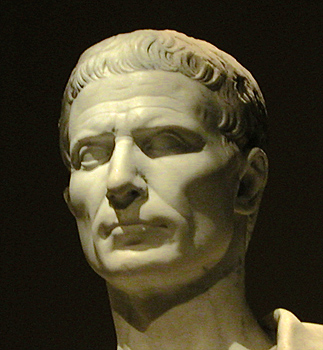
As most of you undoubtedly already know, according to the Roman calendar, the Ides take place every month on either the 15th (March, May, July and October) or the 13th (all others). The Ides of March are the most famous Ides because Julius Caesar was assassinated on the 15th of March, 44 BC.

National Public Radio seems to take the Ides of March pretty seriously, because they have quite a few streaming audio clips in their archives commemorating Caesar's demise.

From the BBC comes lesson plans for Sixty Second Shakespeare and a page from the Sixty Second Times outlining the events of the day!

Enjoy!

Photo courtesy of the Vroma Image Archive

Saturday, March 15, 2008

Pompeiiana!

For nearly twenty years Bernard Barcio produced Pompeiiana, a Latin language newspaper for students which was filled with articles, comics, puzzles and games. Bolchazy-Carducci Publishers has received exclusive rights to all 229 issues which they are planning to scan and make available online for Latin teachers worldwide. Other projects based upon Pompeiiana are also in the planning stages. As you would no doubt expect, the reaction of Latin teachers has been overwhelmingly positive!

Bolchazy-Carducci is asking Latin teachers for their help in locating 2 missing issues. Do you have them? Vol. 2, Issue 1 and Vol. 2, Issue 4. If so, Bolchazy-Carducci would love to hear from you!

Conversational Latin Language Videocasts

Colloquia Latina spectate et audite! The University of Kentucky's Division of Classics has placed a number of videocasts featuring fluent Latin speakers (including Terence Tunberg and Milena Minkova) on their website. Rumor has it that there are more to come!

Saturday, January 19, 2008

The Greek Myths from the Guardian Unlimited

The British newspaper, the Guardian, has recently published a series of six booklets with a unique retellings of the great mythological stories of the ancient Greek and Roman world.

You can read the text of the booklets at the Guardian Unlimited or order copies from their reader offers department.

Tuesday, January 01, 2008

6th Annual National Latin Teacher Recruitment Week 2008

National Latin Teacher Recruitment Week is coming up! This year it will be March 3-7, 2008, which is the first full week in March. The theme for this year is Your Future is Our Future. You can find out more about NLTRW, which is sponsored by the American Classical League, the American Philological Association, and other various regional and local classical organziations by visiting the National Committee for Latin and Greek website. There you can read about past celebrations, get ideas for your own promotions, apply for mini-grants, and more!

Ginny Lindzey has designed a number of extremely cool and very professional promotional items for National Latin Teacher Recruitment Week including t-shirts, mini-buttons, mugs, posters, greeting cards, and yard signs. In addition, the NCLG website has loads of free, downloadable items as well including mini-ads, mini-posters, articles, brochures, flyers, bookmarks and more. Check 'em out! They are mirabile dictu!

IT'S OFFICIAL! LATIN IS IN!

According to today's Washington Post, Latin is officially IN for 2008!

Apparently, AP Calculus is sooooo last year!

Tuesday, December 04, 2007

More Votes for Latin!

Harry Mount, who wrote the editorial in yesterday's New York Times lauding the study of Latin also wrote a similar piece for the Daily Mail (UK) last week.

You can also read a review of Mr. Mount's recent book in the Guardian Unlimited (UK).

Monday, December 03, 2007

Latin Wins the Vote!

Today's op-ed piece in the New York Times casts A Vote for Latin!

Wednesday, November 21, 2007

Grotto of Romulus and Remus May Have Been Found

The mythical cave Lupercal, where legend holds that the infant twins Romulus and Remus were cared for by a wolf, may have been unearthed by Italian archaeologists. More details from the New York Times.

Tuesday, November 20, 2007

Full Time Position for a Latin Teacher in FL

Windermere Preparatory School seeks a 7th and 8th grade Latin teacher, to start on January 2, 2008. It is a full-time position with five sections of Latin a day. Windermere's 7 th and 8th graders use Ecce Romani and are required to take the Latin 1A and 1B series. The successful candidate will work with the high school Latin teacher to build a dynamic program in the Classics. Interested candidates should forward their CV, 3 letters of reference and a statement of teaching philosophy to William Ford, Assistant Headmaster, Windermere Preparatory School, 6189 Winter Garden-Vineland Road, Windermere, FL 34786.

Monday, November 19, 2007

Semester finals are coming!

Need some clever and imaginative ways to help your students prepare for semester finals?

Visit Perlingua for some wonderful ideas including a template for a Dial a Verb wheel that students can make for themselves, a Circle of Life sentence machine and an Excel template for a noun-adjective agreement booklet.

Friday, November 16, 2007

The Poet's Calendar

I came across this poem by Henry Wadsworth Longfellow recently and thought that others might enjoy it. It's positively full of allusions to mythology and the Classical world and seems appropriate for the upcoming winter holidays.

THE POET'S CALENDAR
Henry Wadsworth Longfellow


JANUARY

Janus am I; oldest of potentates;
Forward I look, and backward, and below
I count, as god of avenues and gates,
The years that through my portals come and go.
I block the roads, and drift the fields with snow;
I chase the wild-fowl from the frozen fen;
My frosts congeal the rivers in their flow,
My fires light up the hearths and hearts of men.


FEBRUARY

I am lustration, and the sea is mine.
I wash the sands and headlands with my tide;
My brow is crowned with branches of the pine;
Before my chariot-wheels the fishes glide.
By me all things unclean are purified,
By me the souls of men washed white again;
E'en the unlovely tombs of those who died
Without a dirge, I cleanse from every stain.

MARCH

I Martius am! Once first, and now the third!
To lead the Year was my appointed place;
A mortal dispossessed me by a word,
And set there Janus with the double face.
Hence I make war on all the human race;
I shake the cities with my hurricanes;
I flood the rivers and their banks efface,
And drown the farms and hamlets with my rains.


APRIL

I open wide the portals of the Spring
To welcome the procession of the flowers,
With their gay banners, and the birds that sing
Their song of songs from their aerial towers.
I soften with my sunshine and my showers
The heart of earth; with thoughts of love I glide
Into the hearts of men; and with the Hours
Upon the Bull with wreathed horns I ride.


MAY

Hark! The sea-faring wild-fowl loud proclaim
My coming, and the swarming of the bees.
These are my heralds, and behold! my name
Is written in blossoms on the hawthorn-trees.
I tell the mariner when to sail the seas;
I waft o'er all the land from far away
The breath and bloom of the Hesperides,
My birthplace. I am Maia. I am May.

JUNE

Mine is the Month of Roses; yes, and mine
The Month of Marriages! All pleasant sights
And scents, the fragrance of the blossoming vine,
The foliage of the valleys and the heights.
Mine are the longest days, the loveliest nights;
The mower's scythe makes music to my ear;
I am the mother of all dear delights;
I am the fairest daughter of the year.


JULY

My emblem is the Lion, and I breathe
The breath of Libyan deserts o'er the land;
My sickle as a sabre I unsheathe,
And bent before me the pale harvests stand.
The lakes and rivers shrink at my command,
And there is thirst and fever in the air;
The sky is changed to brass, the earth to sand;
I am the Emperor whose name I bear.


AUGUST

The Emperor Octavian, called the August,
I being his favorite, bestowed his name
Upon me, and I hold it still in trust,
In memory of him and of his fame.
I am the Virgin, and my vestal flame
Burns less intensely than the Lion's rage;
Sheaves are my only garlands, and I claim
The golden Harvests as my heritage.


SEPTEMBER

I bear the Scales, where hang in equipoise
The night and day; and when unto my lips
I put my trumpet, with its stress and noise
Fly the white clouds like tattered sails of ships;
The tree-tops lash the air with sounding whips;
Southward the clamorous sea-fowl wing their flight;
The hedges are all red with haws and hips,
The Hunter's Moon reigns empress of the night.


OCTOBER

My ornaments are fruits; my garments leaves,
Woven like cloth of gold, and crimson dyed;
I do not boast the harvesting of sheaves,
O'er orchards and o'er vineyards I preside.
Though on the frigid Scorpion I ride,
The dreamy air is full, and overflows
With tender memories of the summer-tide,
And mingled voices of the doves and crows.

NOVEMBER

The Centaur, Sagittarius, am I,
Born of Ixion's and the cloud's embrace;
With sounding hoofs across the earth I fly,
A steed Thessalian with a human face.
Sharp winds the arrows are with which I chase
The leaves, half dead already with affright;
I shroud myself in gloom; and to the race
Of mortals bring nor comfort nor delight.

DECEMBER

Riding upon the Goat, with snow-white hair,
I come, the last of all. This crown of mine
Is of the holly; in my hand I bear
The thyrsus, tipped with fragrant cones of pine.
I celebrate the birth of the Divine,
And the return of the Saturnian reign;--
My songs are carols sung at every shrine,
Proclaiming "Peace on earth, good will to men."

Friday, November 09, 2007

Latin Thanksgiving Blessings and Graces

Perhaps some of you are looking for a Latin Grace before Meals for your Thanksgiving celebration. Not every Latin teacher will be able to use this in his or her classroom, but every year, there certainly are requests for a grace.

The following is a well-known blessing:

"Benedic nos Domine
et haec tua dona
quae de tua largitate
sumus sumpturi
per Jesum Christum
Dominum nostrum
Amen."

("Bless us, O Lord,
And these they gifts
which from your bount
we are about to receive
through Jesus Christ
Our Lord
Amen.")

A different version of the above prayer as well as a number of other traditional graces and blessings in Latin can be found at Queens College, Cambridge University's website.

It's possible that you might want to serve some authentic Roman recipes for Thanksgiving, but it's probably more likely that you'd serve a Thanksgiving Cornucopia. (Cornucopia derives from the Latin cornu, meaning horn, and copia, meaning plenty. The lesser Roman divinity of luck, Fortuna, was often portrayed with a cornucopia in one hand and a rudder in the other hand.)


Bookmark Rogue Classicism Now!

Every Latin, Greek and Classics teacher should have Rogue Classicism bookmarked! Why?
  • Everyday you'll know just what happened On This Day in Ancient History!
  • Cope with the writer's strike by checking out the Ancient World on Television!
  • Find a Classics job, see what papers are being called for, and what conferences are coming up!
  • Keep in touch with the Classical blogging world!

Sunday, October 28, 2007

Even Volcanoes Have Official Websites!

It seems there's an official website for just about everything now. This evening I came across the Official Vesuvius National Park site. There are some nice slide shows and photographs as well as some good information for students who might be getting ready to visit Pompeii and Herculeanum, or simply doing a research project.

A few other excellent sites to visit for anyone interested in Vesuvius -- especially those of you using the Cambridge Latin Course -- include:

  • Earth Observatory Maintained by NASA. Be sure to use their search option because there are quite a few images of the volcano available, as well as informative articles.
  • Volcano World Hosted by the University of North Dakota, this wonderful educational site has information about volcanoes worldwide, including a page devoted to Vesuvius. Of course, you'll find instructions on building your own volcano too! Pretty much everything you ever wanted to know about volcanoes can be found here!

Saturday, October 27, 2007

Latin for Dyslexic and Blind Students

Do you have a Latin student who is blind or dyslexic who would benefit from having a digitally recorded textbook? Recording for the Blind and Dyslexic is a national, non-profit organization that provides educational materials to students with severe vision impairments (such as blindness or dyslexia). Subscribers to RFB&D must have a documented disability in order to use their library. Details are on their site.

You'll be happy to know that they have several popular Latin textbooks in their library, including the Cambridge Latin Course, Ecce Romani, and Jenney's Latin.

Friday, October 26, 2007

Halloween Ideas!

Visit veteran Latin teacher Rose William's site for a free downloadable handout entitled "Holidays for Latin Class." Included are ideas for Halloween, Thanksgiving, Christmas and Valentine's Day! Included is a story "Pliny's Haunted House" for intermediate Latin students.

Project Gutenberg has a downloadable version of the Library of the World's Best Mystery and Detective Stories, which includes an English language version of the aforementioned haunted house story. There's another translation at Bartleby, which was originally published in the Harvard Classics series.

VRoma has an excerpt from the original Latin text along with an English version available.

The Kentucky Educational Television Latin Course site has a version of the story with interactive vocabulary hints for readers.

If you'd prefer that your students would write their own scary stories, KET also has a lesson plan with lots of scary Latin vocabulary words!

Long Lost Masterpieces May be Recovered

Classicists may soon have some "new" scrolls to read. The Times (UK) reports that archaeologists have resumed working on excavating a villa located in the ancient city of Herculaneum (destroyed by a volcanic eruption over 2000 years ago in 79 A.D.) which they believe may hold some lost papyri.

Catullus Summer Latin Workshop at Dickinson College

Dickinson College in Carlisle, Pennsylvania is hosting a Summer Latin Workshop focusing on the works of Catullus from July 13-19, 2008. The daily schedule will involve group translation and discussion of the entire extant works of Catullus.

The application deadline is May 1, 2008.

Tuition for the course is $300 (due June 4, 2008) and includes housing (single or double accommodations in college-owned houses), all meals, and access to Dickinson facilities, including library and gym. Participants are responsible for their own travel and book expenses.

The workshop faculty includes Christopher Francese, Associate Professor of Classics, Dickinson College and Meghan Reedy, Visiting Assistant Professor of Classical Studies, Dickinson College.

(Nota Bene: Those of you who listen to the Latin Poetry Podcast undoubtedly recognize Professor Francese's name!)

The Dickinson Department of Classical Studies is an approved provider of
professional development opportunities under Pennsylvania Act 48. Those who complete the workshop will receive approximately 35 hours of Act 48 credit.

For more information, or to apply, please contact Mrs. Barbara McDonald at mcdonalb@dickinson.edu.

Wednesday, October 10, 2007

Pompeii: Tales from an Eruption

Those of you who live in Birmingham, Alabama (or nearby) have a unique opportunity. The Birmingham Museum of Art is currently featuring an exhibit of 500 works of art and artifacts from Pompeii and Herculaneum, the ancient Italian cities destroyed by the volcano Vesuvius in 79 AD.

To help visitors to the exhibit prepare, the curators have designed an impressive Pompeii Birmingham website. For those of us who can't go, the site is still quite impressive and worth browsing. If you're teaching a unit on Pompeii you'll find the site particularly useful. Students can read eyewitness accounts of Pliny the Younger and view actual artifacts from the show. see how the art from Pompeii has influenced modern interior designers. Teachers will especially like the printable lesson plans. and suggested reading lists.

Tuesday, October 09, 2007

Olivia The Essential Latin Edition

Amy High was a Virginia Latin teacher who had great vision and an amazing imagination but sadly passed away in 2003 at the young age of 39. A true loss for her family and also for the Latin teaching community as well. Realizing Latin teachers needed fun materials and incentives for their classrooms, she started her own company, Lumina, creating and distributing innovative stickers and activities to Latin teachers who couldn't find these items anywhere else. She also appeared in the ingenious Forum Romanum series, bringing spoken Latin into classrooms across the United States. Her innovative classroom technique drew the attention of Time Magazine in 2000.

Amy's legacy continues to live on through the Amy High Scholarship for aspiring and current Latin teachers as well as the Alexandria Academy of Fine Arts and Science.

Now Latin teachers have more of Amy's legacy to share with their students with the publication of her Latin translation of the beloved children's story Olivia, originally written by Ian Falconer.

Thursday, September 27, 2007

The Toughest Job You'll Ever Love!

Thinking about becoming a Latin teacher because you'll only teach brilliant, highly motivated kids in the TAG (Talented and Gifted) program?

Ginny Lindzey's insightful article It's a Lot of Work should be required reading for all Latin teacher candidates. Unless you are teaching in a highly selective prep school -- and even that's no guarantee -- you will have students with widely varying abilities. You will also have students with special needs.

It's estimated 1 in 150 children are on the autistic spectrum. Some have classic autism. Others have higher functioning forms of autism, including Asperger's Syndrome. These students are often quite academically able and may very well sign up for Latin. You will have to go to IEP meetings. Don't skip that special education course because you think you won't need it.

Friday, September 21, 2007

Latin Outreach in London, UK

The BBC News reports that inner city students in London will be learning Latin from 15 university students from Kings College and University College of London as part of a project conducted by the Iris Project, directed by Lorna Wing, and sponsored by various classical organizations in the United Kingdom. Teachers and students are responding enthusiastically to the project, which is getting a great deal of positive press coverage.

This is a initiative definitely worth following as it progresses!

Thursday, September 20, 2007

Tuesday, September 18, 2007

Dying Languages

According to this Associated Press story, another language dies out every 2 weeks!

Did You Miss the ACL Institute Last Summer?

Nothing can compare to actually attending an American Classical League Annual Institute! Definitely plan to attend next year if you can!

However, if for some reason you didn't get to go -- or the presenter ran out of materials -- the ACL has created an online directory of presentation handouts from last June. Not all presentations have online materials, but many do. Most are Microsoft Word documents, although a few are in PDF (Adobe Acrobat) format.

Tuesday, September 11, 2007

O Tempora! O Mores!

That's right, school is back in session.

Last weekend's Prairie Home Companion broadcast (honoring education) featured Emeritus Professor Robert Sonkowsky (University of Minnesota, Classics) performing a dramatic reading from Cicero's Oration Against Cataline (In Catalinam I), with a witty English translation by Garrison Keillor. In this show, Keillor also reminisces about his former University of Minnesota Latin Professor, Margaret Forbes.

You can hear more of Robert Sonkowsky's readings at the Society for the Oral Reading of Greek and Latin Literature (SORGLL) site, where you'll also find readings by other highly respected classicists.

Saturday, September 01, 2007

Nuntii Latini Resumes Fall Broadcasting

Nuntii Latini, the News in Latin, is a worldwide broadcast produced by the Finnish Broadcasting Company. After a summer hiatus, Nuntii Latini has resumed its regular program. You can listen online at their site (and read transcripts) or download podcasts from Itunes. The current lead story, Incendia Silvestria Graeciae, reports details of the devastating fires in Greece.

Sunday, August 26, 2007

Grammar Songs for the New School Year!

Latin teachers always seem to be in search of ways to help their students remember all those declensions and conjugations.

David Pelligrino has a collection of Latin Teaching Songs, covering noun declensions, prepositions, personal endings, intransitive verbs, a plethora of pronouns and question words. Especially noteworthy is the Preposition Song (sung to the melody of Ode to Joy by Beethoven), but they are all fun!

Magistra Mattingly has her students Sing Their Way Through Latin Grammar with a songs set to the tunes of the opening themes to Gilligan's Island and the Beverly Hillbillies.

Nota bene: The aforementioned sites include lyrics only.

Don't forget about the Endless Noun Ending Song, which is available in MP3 format, for listening to online.

Saturday, August 25, 2007

Mt. Vesuvius in September's National Geographic Magazine

The September '07 National Geographic Magazine includes a feature story on Pompeii -- Vesuvius, Asleep for Now. The article is accompanied by an impressive photo gallery, field notes, interesting facts, an interactive animation of the explosion and a map of the world's active volcanoes.

Wednesday, August 22, 2007

A Review of the Anima Altera Website

Ginny Lindzey is a Latin teacher who, over the years, has done a great deal to promote the Classics. She's also a talented desktop publishing and webpage designer. Some time ago, she set up the Anima Altera shop on Cafe' Press. It has been some time since I visited her Cafe Press site, but it is obvious that she's done a great deal of work this summer creating new lines. I used to think that all Cafe Press did was t-shirts, but they've apparently added a lot of other items too! Ginny has created loads of cool baseball caps sporting all sorts of Latin mottoes including "Carpe Diem," "Salve," "Crede Mihi," etc. There are also dozens of buttons and mini-buttons. I think these would be perfect for a fund raiser or as incentives for learning. Ginny can also create custom items for Latin clubs and classes as well.

Tuesday, August 14, 2007

Latinum - The Latin Language Learning Podcast from London

Want to become fluent in Latin? Evan Millner, who lives in London, has set up an amazing new website, Latinum, which hosts an online Latin course via podcast. Listeners can download free conversational Latin lessons -- recorded using the Restored Classical Pronunciation --to their MP3 players (such as an Ipod) and immerse themselves in the language.

The list of individuals and organizations who have contributed to the Latinum project is quite impressive and includes many respected scholars and institutions. To name only a few: Stephen Daitz, Robert Sonkowsky, Lorna Robinson, Cambridge University Press, the University of Canterbury (NZ), the University of Californa at Los Angeles, and Swarthmore College.

Topics in the Latinum Podcast archive include poetry, grammar, songs, jokes and readings, contemporary Latin, fluency practice, dictations and more.

What are you waiting for? It's time to get more fluent in Latin!

Monday, August 13, 2007

New IB Discussion Forum

A new blog for discussing the IB Latin curriculum has been set up.

There's an IB Latin email list on Yahoo, but it looks like it has been very quiet since March.

What in the world does IB stand for, many of you may be asking? IB stands for the International Baccalaureate.

The International Baccalaureate program is a international curriculum run by the International Baccalaureate Organization, based in Geneva Switzerland. There are three levels: elementary, middle and diploma level. There is an IB Latin curriculum at the senior high or diploma level. The IB Latin blog and email list have been set up for teachers to discuss the diploma level Latin curriculum.

Friday, August 10, 2007

Technology in Rome -- in Situ and in the Lab!

The American Classical League and its Committee on Educational Computer Applications have just announced an exciting 2 week study tour and workshop in Rome and Campania to be held at the American University of Rome from July 20-August 3, 2008.

Entitled Rome: In Situ & In the Lab, this course (which may be taken for college or continuing education credit) is for teachers of Latin, Greek, the Classics and related disciplines. Participants will visit significant archaeological and museum sites and, in a computer laboratory, learn how to digitally record and use the resulting materials in the classroom and on the web. If you've always wanted to incorporate technology into your classroom, this sounds like a fabulous opportunity!

The instructors are Rob Latousek (Centaur Systems), Julian Morgan (J-PROGS) , Paul Gwynne (American University of Rome), and Cindy Caltagirone (Webmaster of the National Latin Exam and American Classical League websites).

Visit the American Classical League to find out more about the course, view an itinerary or download a registration form. You can also write roblatousek@yahoo.com or contact the American Classical League at 422 Wells Mill Dr., Oxford OH, 45056.

The deadline to register is January 15, 2008!

Minimus - The Mouse That Made Latin Cool!

K.C. Kless has started a new Minimus email discussion list and community on Yahoo for Latin teachers who are using Barbara Bell's extraordinary Latin curriculum in a school setting. There are already homeschool e-mail loops for Minimus, but until now, there hasn't been one for classroom teachers. K.C.'s list will undoubtedly be welcomed by elementary teachers of Latin as a wonderful new resource, alongside the Official Minimus Site and the Official Minimus Blog.

Thursday, August 09, 2007

Latin Games and Quizzes

It's August and many of you are preparing for the fall and the new school year. Many Latin teachers incorporate games and technology into their curriculum.

Robert Patrick's Learning Site includes links to games, drills, exercises and quizzes that he has found useful and he's grouped them according by textbook series. You'll find materials keyed to Cambridge, Oerberg, and Oxford as well as Mythology, the National Latin Exam and Certamen. (There's also a link here to his summary notes and handouts from his ACL 2007 workshop Induite Latinam, Pars Prima, which focused on conversational Latin in the classroom.)

If you teach from the Ecce Romani series, you'll definitely be interested in the Quia Class Pages maintained by Pat Kessler and also Gail Cooper! Both have a huge number of online Latin games covering vocabulary, culture, and syntax. Both have had to subdivide their pages because they've created so many games and quizzes!

You can also find many, many more activities listed at the Latinteach Games and Quizzes Resource page.

Latin is a Language Verse 2

Last week there was some discussion on the Latinteach list about this famous little poem:

Latin is a Language,
As dead as dead can be.
First it killed the Romans
Now it's killing me.

Grace de Majewski's mother taught her this second verse:

A little bit of Caesar
And a touch of Cicero
Help to make the place
Where the crazy people go.

Study Latin at the Base of Pikes Peak

Colorado College sponsors a yearly Summer Latin Institute, which has the purpose of "facilitating the growth of Latin as widely as possible." Experienced Latin teachers from both in and out of Colorado can take courses in order to complete a Masters of Arts in Teaching or simply to continue their education. Half tuition is offered to teachers with an active contract.

The Institute also welcomes those who wish to earn teaching certification in Latin, including new teachers or experienced teachers of other world languages who wish to add an endorsement in Latin.

Visit the Colorado College Summer Latin Institute webpage to see an overview of the 2007 course offerings and find out how to contact the Institute directly to find out about the 2008 curriculum.

Tuesday, July 31, 2007

Latin is a Lot of Fun, As Fun As It Can Be...

DD Farms, a regular contributor to the Latinteach List, has rewritten
this rhyme, mentioned in a previous blog entry:

Latin is a lot of fun,
As fun as it can be,
First it made the Romans laugh,
And now it tickles me.

-DD has dedicated his version to John Traupman's Latin Is Fun.

Five new Latin Teacher MATs from UGA this summer!

Professor Richard LaFleur reports:

"We have FIVE teachers graduating with their MA's this summer!!"

This is excellent news, especially considering the continuing shortage of Latin teachers.

For more information about the University of Georgia's summer program, see this previous post.

Latin Is a Language, Dead as Dead Can Be...

There's a little rhyme, well-known to Latin teachers and students past and present (and no doubt future):

Latin is a language,
Dead as Dead Can Be,
First it Killed the Romans,
Now It's Killing Me.

This little poem has been written inside many textbooks throughout the decades by students, struggling to learn their declensions and conjugations. (Fortunately, we have some really imaginative and well-written textbooks these days that keep students from giving up!)

A member of the Latinteach discussion list asked this week about the 2nd verse. She quickly received an answer from another list member.

All are dead who spoke it.
All are dead who wrote it.
All are dead who learned it,
Lucky dead, they've earned it.

Of course, this is certainly untrue! Despite the claims in this verse, Latin is being used as a means of communication today. Living people actually do speak and write Latin.

The University of Kentucky sponsors a Conventiculum each summer, in which participants live for an extended period of time in an all-Latin environment, speaking and hearing Latin exclusively.

The North American Institute for Living Latin Studies also is hosting its 7th annual Rusticatio Californiae seminar in Petaluma, California this summer.

UMass Boston runs a week-long residential immersion seminar Conventiculum Bostoniense, aimed primarily at teachers, featuring instructional activities, local excursions and social activities in Latin.

It's too late to sign up for 2007 -- these conventiosn and institutes are happening this week and next -- but interested individuals are encouraged to visit the websites for these Conventicula and make plans for 2008!

If you'd like to read some Latin, written to keep you informed about current events and knowledge, check out:

Nuntii Latini, an online broadcast of world news, read in Latin, brought to you each week from the Finnish Broadcasting Company. This news show is also available as a podcast!

Vikipaedia, the Latin language version of Wikipedia.

Professor John Traupman has written a wonderful manual for anyone interested in developing spoken fluency in Latin. Entitled Conversational Latin for Oral Proficiency, this is a great starting point and a wonderful reference.

The Communicating in Latin page on the main Latinteach.com website includes many podcasts, webcasts and other excellent resources for those of you who would like to hear some Latin. I hope you'll be inspired and and realize the reports of Latin's death have been greatly exaggerated.


Sunday, July 29, 2007

When In Rome, Remember Your Sandals!

That's the unofficial title for a new on-line Latin teaching methods course offering being developed for the University of Georgia's Department of Classics through the University of Georgia's office of Independent and Distance Learning. To find out why this will be the unofficial title, you'll need to read to the end of this blog entry.

Taught by the highly respected Franklin Professor of Classics Richard A. LaFleur, Latin 4770/6770 Methods and Materials for Latin Teaching will carry 3 hours of undergraduate or graduate level credit, depending on the student/teacher'as prior preparation and training. Qualified students may enroll at any time, work at their own pace, and complete the course in as little as two months time or up to nine months from course registration.

In the past, prospective teacher candidates across the country often had to take methodology courses that did not take into account the special preparation necessary to teach a classical language. While Latin teachers can benefit greatly from studying methodologies used by modern language teachers, many teachers in training found themselves in courses taught by professors who simply did not understand (or sometimes did not even care) how current methodological and pedagogical research could be applied to classical languages. Now, Latin teachers everywhere will have the opportunity to study methodology with a professor who really cares about Latin and the Classics and who has years of research and practice in the field!

Methods and Materials for Latin Teaching's website will be open to anyone -- not just students. Professor LaFleur's vision is that:

"it will be of some value, not just to my methods students, but to Latin teachers everywhere, especially to novice teachers and teachers-in-training–though there may be some RES BONAE here even for veterans!"
Without a doubt, this new site will be more than just "of some value." It will be invaluable, with representative materials, lesson plans, handouts, powerpoints, and links. It certainly sounds like it will be RES OPTIMAE!

Currently, Professor LaFleur is in the process of developing the site and is requesting Latin teachers to consider submitting their "exemplary and innovative" materials.

Now, what do SANDALS have to do with a methods course? For years, Professor LaFleur has been exhorting his Latin students to remember their SANDALS, which is a mnemonic for the six multisensory aspects of language learning: "Spectate, Audite, Nunc Dicite, Agite, Legite, Scribite!" ("Look, Listen, Now Say, Do, Read and Write!") To find out more and download a free mnemonic poster, visit the site.


Tuesday, July 24, 2007

Harry Potter on the Classics Blogs


Mark Keith, a Latin teacher who blogs on the rather cleverly named Marginalia, has written a rather insightful entry on Authors as Prophets, in which he reflects on a passage from the first Harry Potter book:


"in which Professor McGonagall claims, '[Harry Potter will] be famous -- a legend -- I wouldn't be surprised if today was known as Harry Potter day in the future -- there will be books written about Harry -- every child in the world will know his name!' When Rowling was writing this first book, surely she didn't believe that her books would be so wildly successful. She could certainly hope so, but hindsight now proves her prophetic statement to be amazingly correct!"

Mark goes on to refer to Latin authors who have made similar statements in their own works. It's an interesting reflection on the Classical connections in Rowling's work.

I'm sure that many people are going back to re-read the entire series. I've started re-reading it too.

Meanwhile
, David Meadows at Rogue Classicism notes that J.K. Rowling's next project may have a direct classical link.

Monday, July 23, 2007

Harry Potters Knows -- or Knew -- Latin! (Spoiler Free Zone!)


Nota Bene: To find out whether or not Harry lives or dies, you're just going to have to read the book. I'm not telling.


I finished reading all 759 pages of the Deathly Hallows about 24 hours after I started. I'm not giving away any spoilers though! But I thought that you all might be interested in Harry Potter's Latin connections. Many of the spells Harry, Hermione, Ron and the rest of the wizards use in the series have Latin derivations. J.K Rowling taught herself Latin and uses the language extensively in the series.

Here are a few resources for those of you who would like to find out more.

Wikipedia has a hyperlinked compendium of spells in Harry Potter.

Mugglenet maintains a comprehensive list of spells and charms as well as an index of name origins.

Veritaserum also has an online dictionary of spells and charms.

Children's BBC has a teacher's lesson plan based upon the Latin used in spells in the series.

Saturday, July 21, 2007

No Harry Potter Spoilers Here

My copy of Harry Potter and the Deathly Hallows arrived in the mail today! I've only read a few chapters so far. On the one hand, I want to take my time enjoying the final book in the series. I don't want to read it too fast, because it really is quite likely the final book. On the other hand, I would really like to finish it before people really start talking about it. I can't stand it when people spoil a good story!

Those of you who have taken note of J.K. Rowling's literary and word play allusions to the classics will be interested to know that one of the quotations that she has chosen to preface her book with is taken from The Libation Bearers by the Greek playwright Aeschylus (translated by Robert Fagles.) The other quote is from William Penn. That's all I'm saying for now.

Teaching Roman History


The Romans is an outstanding free online resource based upon Antony Kamm's book, Introduction to the Romans, originally published by Routledge. Andrew Wilson, who also maintains the superb Classics Pages, did the work of transcribing and hyperlinking the pages. You may also recognize Andrew Wilson as the person who translated Harry Potter and the Philosopher's Stone into Ancient Greek!

The Romans website includes not only the text of the Kamm's book, but also photographs, original illustrations, timelines, and best of all, interactive activities and quizzes!

Friday, July 20, 2007

Ancient Bath Complex Unearthed in Rome

Archaeologists have uncovered an incredibly ornate 2nd century bath complex in Rome. This is an unbelievably luxurious bath site. Excavations are still underway.

The most famous baths in the world are the Roman Baths in the city of Bath, England. The official website includes an interactive site plan where you can can find out more about the site in ancient and modern times. If you are ever in England, it's an amazing site to visit in a lovely city, not far from London. You can see more photographs of the Roman Baths in England at the Bluffton University Index of Art Historical Sites as well as the Maecenas archive.

Wednesday, July 18, 2007

Rubrics and Benchmarks

Ginny Lindzey recently wrote about Rubistar, a rubric creation tool, on the Latinteach list.

Teachers can use this tool to create, save and access rubrics, or scoring criteria benchmarks online. There's a searchable database of shared rubrics there too.

4teachers, which hosts the Rubistar site, also maintains an entire suite of teacher tools: Quiz Sar, Academic Skill Builders, Persuade Star, Classroom Architect, Equity (for a Diverse classroom), Trackstar, and more!

Latin Teacher Retires After 30 Years

Gary LeGates, a Maryland Latin teacher, is retiring this year. Read more about his initial job search and outstanding career. (Blind Teacher Could See More Than Most, Examiner, July 14, 2007).

Thursday, July 12, 2007

Latin Teacher Shortage

It's true! There is a Latin teacher shortage! In the State of Maine there are over 60 Latin programs and some schools have waiting lists for Latin classes. There is a real worry that when current Latin teachers retire, there will be no one to replace them. You can read more about the the situation in Maine here. But you should also know that this isn't a regional shortage. It's a national shortage! Every spring and summer, schools are trying to find candidates to fill teaching vacancies.

Monday, July 09, 2007

Updated: Latin Lessons from a Retired Professor

Previously I had written in this blog about Emeritus Professor Bob Milns' online Latin lessons. At that time, there were no audio files to accompany the lessons. Now there are 2 sets of related audio -- both Latin Greetings and Latin Shopping.

Georgia Classics Summer Institute

If you are a Latin teacher who wishes to continue your education, enhance your teaching or would like to earn your Master's Degree on a summer's only basis, you need to check out the Georgia Classics Summer Institute.

The Georgia Classics Summer Institute offers a variety of undergraduate and graduate Latin and Classics courses and, in odd-numbered years, Intensive Beginning Greek, and, in even-numbered years, Intensive Beginning Latin. The Institute curriculum is supplemented by workshops and guest lectures by visiting Master Teachers and other scholars.

Methods courses are offered each summer, and there is a new non-thesis option for teachers.

Out-of-state tuition is WAIVED for Latin teachers, who pay only the low IN-STATE tuition; scholarships are available from the department, and many of the Institute participants are awarded scholarships by ACL, CAMWS, and other organizations.


For details visit this site: http://www.classics.uga.edu/summer/summer.htm

CPL Online Journal

It's summer and an excellent time to catch up on some professional reading. You may not be aware of it, but the Committee for the Promotion of Latin, sponsored by the Classical Association of the Middle West and South, publishes an online journal, CPL Online.

CPL Online's index shows that the journal covers a diverse range of topics: grammar, oral Latin, reading and translation strategies, sight translation, and pedagogical theory and practice. There are articles on teaching Latin to elementary students and to students with disabilities. If you need mnemonics or songs, CPL Online has those too!

Most are written in Adobe Acrobat (.pdf file) format, so you'll need the Acrobat Reader.

Monday, July 02, 2007

Why You Should Read Latinteach

Ginny Lindzey wrote this very insightful entry about teaching -- how teachers must have passion for their subject in order to build their programs. For those who are feeling burned out she recommends conferences and online discussion groups. The American Classical League held its annual Institutes and Workshop last weekend, but its not too late to interact with your colleages. Ginny states: "Lists like Latinteach give you a new way of looking at things and a world of other people to ask for advice."


Latin Lessons from a Retired Professor

From the Australian Broadcasting Company in Brisbane comes a Latin lesson by Emeritus Professor Bob Milns. (Thanks to David Meadows from RogueClassicism for pointing out this gem this morning!)

This short lesson includes 3 dialogues: a greeting, a school exchange and a shopping trip. Sadly, no audio.

Tuesday, June 26, 2007

Total Physical Response & Latin

If you are trying to incorporate more spoken Latin for fluency and understanding into your classroom, there's a wonderful discussion about TPR and Latin on the Latinteach email discussion list going on right now! Go to Latinteach.com to find out how to join the list!

If you have no idea what TPR teaching is, check out this Wikipedia entry.

There are lots of great TPR and TPRS ideas specifically for Latin teachers on Thomas McCarthy's site. Tom has even written a book entitled Nunc Loquamur, designed to get your students speaking Latin!
Harry Potter 24 Days and Counting!

In less than a month, The Harry Potter saga will finally be concluded. Latin teachers are gearing up for a new round of students coming to ask them for translations of incantations based on clever word play influenced by the classical languages!

Speaking of Latin teachers, have you seen the HogwartsProfessor.com website? If you're a Potter fan, be sure to have plenty of time because there's lots to read and think about here!

John Granger, the full-time Latin and English teacher who blogs on the HogwartsProfessor site is the author of Unlocking Harry Potter: Five Keys for the Serious Reader, Looking for God in Harry Potter, The Hidden Key to Harry Potter and a contributor to Who Killed Albus Dumbledore: What Really Happened in Harry Potter and the Half Blood Prince? Having taken a look at his blog, I'm putting these books on my reading list to tide me over until that seventh book comes out!

P.S. I know I've mentioned this site before, but here's a great article on incorporating Harry Potter into the Latin classroom. It's also written by 2 Latin teachers, Ginny Lindzey and Clint Hagen.

Monday, June 11, 2007

Rome Reborn 1.0

Rome Reborn 1.0 is truly an incredible website! Brought to you by the Institute for Advanced Technology in the Humanities and the University of Virginia, Rome Reborn includes a gallery of still images,. video and audio clips. View computer models of the eternal city. Wander the streets of an amazing ancient virtual Rome. Listen to audio clips about the history and future of the project.

You can read more about Rome Reborn on Yahoo News.

Monday, June 04, 2007

De Discendi Natura

Undoubtedly, you've noticed that your students learn in many different ways. This means that teachers need to teach in many different ways. Not only does it alleviate boredom, but it allows a teacher to present material more than once and review and practice with students.

Ruth L. Breindel has written a wonderful book entitled De Discendi Natura: Learning Styles in the Teaching of Latin. This is a wonderful book that presents 24 different learning styles and provides concrete examples for each. If you've been searching for ways to vary your teaching presentation style and review material in different ways, this is the book for you. Published by the American Classical League's Teacher's Materials Resource Center (TMRC), this would be a great book to pick up for the summer to prepare for next year.

Sunday, May 20, 2007

A Latin Wiki

John Muccigrosso has set up a Latin Wiki. A Wiki is a web-page that multiple users can edit. This Latin Wiki was set up for the purpose of collecting useful things for teaching and learning Latin. here you'll find a collection of sentences that provide examples of various syntactic and semantic constructions in Latin. This could be very handy for those of you who are teaching or learning more advanced grammar, such as ablative absolute, future passive periphrastics, subjunctive clauses, all the different types of pronouns, irregular verbs, etc.

Wednesday, May 16, 2007

Rosa Latinae

Rose Williams has just launched her new website!

A native of Abilene, Texas, Rose taught Latin there for many years. She's now retired but she hasn't slowed down one bit! Rose is the author of a number of clever and amusing books on classical themes. Her most recent release, The Lighter Side of the Dark Ages, "deals with the 500 years after the fall of Rome in the West, when people went right on calling themselves Roman and paying tribute to an ideal which had largely ceased to be real." Students love her books because they are readable. Rose has a witty and ironic writing style. Teachers love her books because they are well-researched and educational.

Some of Rose's other books include Once Upon the Tiber, The Labors of Aeneas: What a Pain It Was to Found the Roman Race, and Vergil for Beginners

Rose's site includes more information about all of her books as well as some wonderful, print quality teaching materials for you to try out in your Latin classroom! Enjoy!

Monday, May 14, 2007

The Forecast Is Looking Good for Latin in the UK

According to the Guardian Unlimited, a daily newspaper in the UK, Latin is taking state sector schools "by storm" in Great Britain!

Roman Mysteries on BBC

Caroline Lawrence's Roman Mysteries series premiered on May 8th, 2007, in Great Britain. No word if or when it will be available in the United States, but in the meantime you can enjoy the Roman Mysteries Game, see a video trailer, find out about the characters and see an episode guide on the BBC website above. If you're in the UK, tune in to BBC1 on Thursdays at 4:30 pm.

Of course, you can always read Caroline's books while you wait. Start with Thieves of Ostia, the first book in the series. In this book, you'll be introduced to the main characters -- Flavia, Jonathan, Miram, Nubia and Lupus -- as they seek to solve the mysterious deaths of dogs in their neighborhood. Followup titles include Secrets of Vesuvius, Pirates of Pompeii, Assassins of Rome and 12 more titles.

Caroline Lawrence maintains an author's website where interested readers can read her bio, check out her blog, download and print nifty bookplates, and read the newscroll to find out what's coming up next for Flavia and her author.

<

Sunday, May 13, 2007

Here are some good sources of photographs and art to enhance your teaching. Some are free and some are for purchase. Be sure to adhere to copyright laws!

Ancient World Mapping Center Maps for Students Digitized maps for educational use. Teachers and students may use these maps for educational or personal use. Most of these maps come with a customizable blank version, quite suitable for quizzes and tests.

Centaur Systems carries the professional quality JPROGS image collections (many 1200 pixels wide) on CD-ROM. Collections available include Romana, Pompeii, Hellenika, Hispania. Rome the Eternal City, Roman Africa, etc. These images are suitable for presentations, websites and classwork and other non-commercial use.

Maecenas, Vroma and Imagines Locorum Romanorum Antiquorum are 3 sources for free, non-commercial photographs of Classical themed subjects. These are very good resources but be aware that some photos are scans or web quality (meaning fewer pixels for faster download, which means they may not enlarge well.)


Wednesday, May 09, 2007

Amy High Memorial Scholarship Fundraiser

Those of you living near Alexandria, VA, should plan to attend the Amy High Memorial Scholarship Fundraiser this weekend at the Lyles Crouch Elementary School located at 530 S. Asaph St., Alexandria, VA. The fundraiser will last from 2:00pm-6:00pm. The activities will feature wonderful food, live music, Roman Legionnaires, and a silent auction. There will also be a petting zoo and face painting for the children!

Amy High was a Virginia Latin teacher who had great vision and an amazing imagination but sadly passed away several years ago at the young age of 39. A true loss for her family and for the Latin teaching profession as well. To find out more about Amy High and the work that she did, you can read this article on the Time Magazine website.

You should also visit the Forum Romanum site. Amy played the part of Julia Pauli in these fun news videos, performed entirely in Latin.

The Amy High Memorial Scholarship provides funding for prospective and practicing Latin teachers to attend the Reginald Foster Latin Summer Study in Rome, Italy. Amy was a great proponent of active Latin and studied with Fr. Foster for several summers. According to the organizers, $20,000 was raised at last year's fundraiser and $10,000 in scholarships was awarded this year. The organizers hope to make this scholarship self-sustaining. Find out more by visiting the scholarship's official website. You can also download this year's poster.

Hopefully, this scholarship fund will inspire a new generation of Latin teachers to carry on the work that Amy started!