Dexter Hoyos passes along the word that there is a new website dedicated to telling the life of Julius Caesar through coins. Designed and maintained by the Australian Centre for Ancient Numismatic Studies at Macquarie University, Sydney, The Coinage of Julius Caesar is a unique biographical look at the his life, accomplishments, and legacy. There are numerous high quality clickable photographs of coins and viewers can examine both obverse and reverse images via a mouseover. Major highlights include the early career of Julius Caesar, the Gallic and Civil Wars, portraits of Caesar, as well as the influence of the first Caesar upon the coinage of his successors.
A bibliography, glossary and reference catalogue accompany the main site.
This is a particularly interesting site for anyone reading Caesar's De Bello Gallico or De Bello Civili, as well as students of Roman history or ancient numismatics (the study of coins.)
Saturday, August 09, 2008
Friday, August 08, 2008
Call for Latin Teacher Presenters: NECTFL Conference
The Northeast Conference on the Teaching of Foreign Languages (NECTFL) is a multi-level, multi-language conference of national stature held each year in the spring, generally in New York City. In 2009, the conference will take place April 16-18 at the Marriott Marquis overlooking Times Square on Boardway. The theme is "Engaging Communities."
NECTFL puts out a call for proposals every year in January with a May 15 deadline. A Program Committee of its Board of Directors reads all proposals and selects the best for presentation at the following year's conference (in March or April). The purpose of the conference is to provide outstanding professional development for teachers of language and culture, so selection criteria reflect that priority.
Occasionally, NECTFL finds that it does not have a sufficient number of sessions to attract teachers of a given language or level of instruction. Although the conference is too small to provide sessions in all languages and levels during each of its ten time slots on Friday and Saturday, NECTFL tries to have good representation for the languages that are dominant in the northeastern U.S. and has been quite successful in convincing teachers of Latin to attend the conference and to present sessions. A session on Latin by Ashley Broseker-Tremper was chosen as "Best of NECTFL" last year and sent on to the 2007 ACTFL Conference in San Antonio!
Nonetheless, NECTFL needs to recruit several more presenters for 2009 to ensure a rich, full program of offerings for teachers of Latin at all levels of instruction.
To that end, NECTFL invites Latin teachers to consider submitting a proposal.
Sessions are 75 minutes in length and focus on one of the following categories:
* articulation
* assessment/testing
* communities/workplace
* connections/comparisons
* culture/literature
* curriculum
* diversity
* instructional strategies
* materials
* policy/issues
* professional development
* research
* technology
Sessions may be intended for any level of instruction from prekindergarten through adult/government language schools. They may be presented in English with Latin (and possibly other target languages) providing examples to illustrate. Conference attendees are seeking either a very lively presentation or a hands-on, interactive experience. Attendees do not sign up in advance for sessions, so it is difficult to predict exactly how many will come to any given session, but NECTFL avoids scheduling two sessions during the same time slot on any language with relatively few offerings, specifically to ensure that every attendee who teaches that language will probably go to the one available session. (Of course, some sessions do not focus on any particular language, and there will also have an exhibit hall with a large number of companies promoting materials and services that attendees love to visit.)
NECTFL is a small non-profit, so unfortunately presenters must cover their own expenses and must pay the preregistration fee of $150. NECTFL also charges a nominal fee for certain AV items and technology services to help us defray the very high hotel costs for those items. Presenters choose the equipment they need by checking boxes on the proposal form.
The online proposal form is at http://www.nectfl.net/proposal/proposalsolicited.cfm
NECTFL encourages Latin teachers to have a look and to contact the executive director if you have any questions. If you do decide to submit a proposal, please do so as soon as possible so it can be publicized, in order to encourage more attendance by teachers of Latin.
The point of contact for NECTFL's Northeast Conference is Rebecca R. Kline, Ph.D. Executive Director, Northeast Conference at Dickinson College, Carlisle PA 17013. The website address is: http://www.nectfl.org
NECTFL puts out a call for proposals every year in January with a May 15 deadline. A Program Committee of its Board of Directors reads all proposals and selects the best for presentation at the following year's conference (in March or April). The purpose of the conference is to provide outstanding professional development for teachers of language and culture, so selection criteria reflect that priority.
Occasionally, NECTFL finds that it does not have a sufficient number of sessions to attract teachers of a given language or level of instruction. Although the conference is too small to provide sessions in all languages and levels during each of its ten time slots on Friday and Saturday, NECTFL tries to have good representation for the languages that are dominant in the northeastern U.S. and has been quite successful in convincing teachers of Latin to attend the conference and to present sessions. A session on Latin by Ashley Broseker-Tremper was chosen as "Best of NECTFL" last year and sent on to the 2007 ACTFL Conference in San Antonio!
Nonetheless, NECTFL needs to recruit several more presenters for 2009 to ensure a rich, full program of offerings for teachers of Latin at all levels of instruction.
To that end, NECTFL invites Latin teachers to consider submitting a proposal.
Sessions are 75 minutes in length and focus on one of the following categories:
* articulation
* assessment/testing
* communities/workplace
* connections/comparisons
* culture/literature
* curriculum
* diversity
* instructional strategies
* materials
* policy/issues
* professional development
* research
* technology
Sessions may be intended for any level of instruction from prekindergarten through adult/government language schools. They may be presented in English with Latin (and possibly other target languages) providing examples to illustrate. Conference attendees are seeking either a very lively presentation or a hands-on, interactive experience. Attendees do not sign up in advance for sessions, so it is difficult to predict exactly how many will come to any given session, but NECTFL avoids scheduling two sessions during the same time slot on any language with relatively few offerings, specifically to ensure that every attendee who teaches that language will probably go to the one available session. (Of course, some sessions do not focus on any particular language, and there will also have an exhibit hall with a large number of companies promoting materials and services that attendees love to visit.)
NECTFL is a small non-profit, so unfortunately presenters must cover their own expenses and must pay the preregistration fee of $150. NECTFL also charges a nominal fee for certain AV items and technology services to help us defray the very high hotel costs for those items. Presenters choose the equipment they need by checking boxes on the proposal form.
The online proposal form is at http://www.nectfl.net/proposal/proposalsolicited.cfm
NECTFL encourages Latin teachers to have a look and to contact the executive director if you have any questions. If you do decide to submit a proposal, please do so as soon as possible so it can be publicized, in order to encourage more attendance by teachers of Latin.
The point of contact for NECTFL's Northeast Conference is Rebecca R. Kline, Ph.D. Executive Director, Northeast Conference at Dickinson College, Carlisle PA 17013. The website address is: http://www.nectfl.org


Monday, August 04, 2008
Second Free Webinar Planned: Latin for the New Millennium
On Thursday, August 7, 2008, at 3:00pm EDT, Bolchazy-Carducci will be presenting a second free Webinar focusing on their new, introductory two year series, Latin for the New Millennium. Series editor LeaAnn Osburn will review the textbooks, teachers' manuals and other ancillary materials, as well as take questions from the attendees. Attendance will be capped at 30 participants.
All you need to participate is high speed internet access, a speaker phone and an access code which will be provided in an electronic invitation sent one day prior to the webinar, containing a link and login information. Contact Bolchazy-Carducci Publishers for further information.
All you need to participate is high speed internet access, a speaker phone and an access code which will be provided in an electronic invitation sent one day prior to the webinar, containing a link and login information. Contact Bolchazy-Carducci Publishers for further information.
Sunday, August 03, 2008
Latin Lives -- in New York City!
Latin is alive and flourishing in New York City, but there is a continued need for certified teachers in the Big Apple, according to Professor Ronnie Ancona, a Latin and Classics professor at Hunter College in Manhattan. This weekend's Staten Island Advance reports that "the market for Latin is very strong in the New York City area."
(Link no longer active): Latin Undergoing a Resurgence Among Students: 'Resquiescat in pace' (rest in peace) no longer seems an appropriate dismissal.
(Link no longer active): Latin Undergoing a Resurgence Among Students: 'Resquiescat in pace' (rest in peace) no longer seems an appropriate dismissal.
Friday, August 01, 2008
2009 Dickinson College Latin Workshops
Start planning now for next year!
What: Dickinson Latin Workshop: Roman Myth
When: Saturday, February 21, 2009, 10:00 a.m. to 2:00 p.m.
Where: Dickinson College, Carlisle, Pennsylvania, USA
Speaker: Stephen Heyworth, Fellow and Tutor in Classics, Wadham College, Oxford University
Details: Prof. Heyworth is an authority on Latin poetry, especially Propertius and Ovid. He is currently working on Ovid's Fasti, and will share his thoughts on Roman myth in a three hour workshop, with ample time for questions and discussion. Lunch will be provided. The workshop is intended for teachers of Latin, but please pass this along to teachers of other subjects who might be interested.
The workshop is free of charge, but pre-registration is required so that materials can be sent in advance. For directions and pre-registration, please contact Mrs. Barbara McDonald by email before February 1, 2009: mcdonalb@dickinson.edu
What: Summer Latin Workshop at Dickinson College
When: July 12-17, 2009
Where: Dickinson College, Carlisle, Pennsylvania, USA
Application Deadline: May 1, 2009
Tuition: $300 (due June 1, 2009)
Daily schedule will involve group translation and discussion of Cicero's De Re Publica.
For more information visit http://latincamp.wetpaint.com/
What: Dickinson Latin Workshop: Roman Myth
When: Saturday, February 21, 2009, 10:00 a.m. to 2:00 p.m.
Where: Dickinson College, Carlisle, Pennsylvania, USA
Speaker: Stephen Heyworth, Fellow and Tutor in Classics, Wadham College, Oxford University
Details: Prof. Heyworth is an authority on Latin poetry, especially Propertius and Ovid. He is currently working on Ovid's Fasti, and will share his thoughts on Roman myth in a three hour workshop, with ample time for questions and discussion. Lunch will be provided. The workshop is intended for teachers of Latin, but please pass this along to teachers of other subjects who might be interested.
The workshop is free of charge, but pre-registration is required so that materials can be sent in advance. For directions and pre-registration, please contact Mrs. Barbara McDonald by email before February 1, 2009: mcdonalb@dickinson.edu
What: Summer Latin Workshop at Dickinson College
When: July 12-17, 2009
Where: Dickinson College, Carlisle, Pennsylvania, USA
Application Deadline: May 1, 2009
Tuition: $300 (due June 1, 2009)
Daily schedule will involve group translation and discussion of Cicero's De Re Publica.
For more information visit http://latincamp.wetpaint.com/
Classical Mythology & More and the Medusa Mythology Exam Webinar
Mon., August 4 - 2:00 p.m. EST (1 p.m. CST): “Classical Mythology & More and the Medusa Mythology Exam,” Marianthe Colakis, Townsend Harris High School. Cost $99.
This webinar aims to generate discussion among teachers on preparing students for national examinations in mythology and the ways in which Classical Mythology & More can help. This book paraphrases the original sources as much as possible, keeping editorial comment and embellishment to a minimum. It offers short answer exercises for self-testing recall of names and events, and more thought-provoking questions to encourage deeper reflection. This webinar will also discuss the purpose of studying myths in secondary school and consider the ways they can still tell us about ourselves.
If you are a junior high or high school teacher, check with your school, district, or state department of education prior to enrolling to ensure you will qualify for credits towards professional development. In many states, these webinars may be treated like professional conferences.
Visit Bolchazy-Carducci Publishers for more information.
This webinar aims to generate discussion among teachers on preparing students for national examinations in mythology and the ways in which Classical Mythology & More can help. This book paraphrases the original sources as much as possible, keeping editorial comment and embellishment to a minimum. It offers short answer exercises for self-testing recall of names and events, and more thought-provoking questions to encourage deeper reflection. This webinar will also discuss the purpose of studying myths in secondary school and consider the ways they can still tell us about ourselves.
If you are a junior high or high school teacher, check with your school, district, or state department of education prior to enrolling to ensure you will qualify for credits towards professional development. In many states, these webinars may be treated like professional conferences.
Visit Bolchazy-Carducci Publishers for more information.
Sunday, July 27, 2008
Gladiator Sandals Are The Summer 2008 Fashion Statement
The New York Times reports on shoe and sandal fashion this week, advising that gladiator sandals are very, very in.
You can get a simple pair of Gladiator Sandals at Old Navy for about $19.95. Piperlime, a San Francisco-based accessories company, also carries a wide selection of caligae-inspired shoewear in a range of prices.
Top Shop, a British-based clothing and fashion chain, carries a knee high version for 50 pounds, or approximately $100.
You can get a simple pair of Gladiator Sandals at Old Navy for about $19.95. Piperlime, a San Francisco-based accessories company, also carries a wide selection of caligae-inspired shoewear in a range of prices.
Top Shop, a British-based clothing and fashion chain, carries a knee high version for 50 pounds, or approximately $100.
Monday, July 21, 2008
Speak Latin and Impress a Knight!
A Latin quote from last weekend's episode of Robin Hood on BBCAmerica. The gang is looking for the Thesaurus Patriae ("Treasure of the Nation", a take-off on "National Treasure") Djaq, the female Saracen warrior, translates the meaning of the phrase and a rather impressed knight declares, "She speaks Latin! WHAT A WOMAN!"
On a previous episode ("Get Carter!") Robin Hood has seemingly been slain by an assassin, who prays in Latin over the outlaw's apparently dead body, as Robin's friends carry him into the city of Nottingham. Upon arriving at the castle, the Sheriff of Nottingham dismisses the retinue, growling "Enough with the gobbledygook! Exeunt!")
You'll also occasionally hear some Latin on the new series of Doctor Who, so it is possible that many of you Latin and Classics majors may have a future with the BBC! Keep studying!
On a previous episode ("Get Carter!") Robin Hood has seemingly been slain by an assassin, who prays in Latin over the outlaw's apparently dead body, as Robin's friends carry him into the city of Nottingham. Upon arriving at the castle, the Sheriff of Nottingham dismisses the retinue, growling "Enough with the gobbledygook! Exeunt!")
You'll also occasionally hear some Latin on the new series of Doctor Who, so it is possible that many of you Latin and Classics majors may have a future with the BBC! Keep studying!
Friday, July 11, 2008
New AP Latin Teachers Guide Available!
Susan Bonvallet (Wellington School, Columbus, OH) and Dawn LaFon (White Station High School, Memphis, TN) have written a new AP Latin Teacher's Guide, which is available for download from the AP Central College Board Latin website. The advice on syllabus design is targeted at AP Latin teachers of course, but teachers of beginning and intermediate Latin will benefit from reading and studying this new guide.
Consider downloading it even if you do not teach an Advanced Placement Latin course. The AP Latin Teacher's Guide includes over 200 pages of teaching strategies, activities and resources, which teachers can adapt and customize to their own classrooms. The authors have included ten sample syllabi from experienced classroom teachers along with rubrics, timetables, assignments, activities, guidelines for translation and sight reading, bibliographies, web resources, ideas for incorporating the Classics standards, lists of curriculum distributors, professional opportunites, networking ideas, and much more.
Consider downloading it even if you do not teach an Advanced Placement Latin course. The AP Latin Teacher's Guide includes over 200 pages of teaching strategies, activities and resources, which teachers can adapt and customize to their own classrooms. The authors have included ten sample syllabi from experienced classroom teachers along with rubrics, timetables, assignments, activities, guidelines for translation and sight reading, bibliographies, web resources, ideas for incorporating the Classics standards, lists of curriculum distributors, professional opportunites, networking ideas, and much more.
Wednesday, July 09, 2008
Free Webinar: Latin for the New Millennium
LeaAnn Osburn, series editor for Latin for the New Millennium, will be leading a free, informational webinar -- a live, online conference -- about the books and ancillaries on Tuesday, July 22, from 2-3 PM Central Time. Latin for the New Millennium is a newly published introductory Latin course for high school and college students. (See the Scope and Sequence and sample pages.)
The online session is free and open to anyone interested in learning more about this new curriculum choice, which combines the reading approach and the grammatical method, as well as incorporating optional conversational material. Participants will be able to ask LeaAnn questions in real time.
(Bolchazy-Carducci has started offering fee-based continuing education webinars this summer. as well. See their Webinar schedule for upcoming online discussions and presentations. The free Latin for the New Millennium webinar seems like a great way to get an idea how a web seminar works.)
If you would like to participate, please e-mail Andrew Reinhard at areinhard@bolchazy.com, who will send you the link to the meeting. Webinars require that you have a telephone (the call is toll free) and something faster than a dial-up Internet connection to your Mac/PC.
The online session is free and open to anyone interested in learning more about this new curriculum choice, which combines the reading approach and the grammatical method, as well as incorporating optional conversational material. Participants will be able to ask LeaAnn questions in real time.
(Bolchazy-Carducci has started offering fee-based continuing education webinars this summer. as well. See their Webinar schedule for upcoming online discussions and presentations. The free Latin for the New Millennium webinar seems like a great way to get an idea how a web seminar works.)
If you would like to participate, please e-mail Andrew Reinhard at areinhard@bolchazy.com, who will send you the link to the meeting. Webinars require that you have a telephone (the call is toll free) and something faster than a dial-up Internet connection to your Mac/PC.
Latin as an Employment Benefit!
If you worked for Galore Park publishing house, you could learn Latin over your lunch hour! Galore Park was featured in a BBC News video story this week as well as in the Daily Mail. (Doctor Who fans will especially enjoy the BBC clip!)
Galore Park publishes Latin Prep and So You Really Want to Learn Latin (Books I-III) as well as Greek: A New Guide for Beginners. They also publish a book of Latin puzzles (written by Julian Morgan of J-PROGS) as well as workbooks and review/revision materials for students who plan to take the GCSE (General Certificate of Secondary Education, a set of qualifications often required before taking A-levels, which are prerequisite for entrance into the British university system) or the Common Entrance exams (typically required for entrance into senior level independent British secondary schools).
Galore Park publishes Latin Prep and So You Really Want to Learn Latin (Books I-III) as well as Greek: A New Guide for Beginners. They also publish a book of Latin puzzles (written by Julian Morgan of J-PROGS) as well as workbooks and review/revision materials for students who plan to take the GCSE (General Certificate of Secondary Education, a set of qualifications often required before taking A-levels, which are prerequisite for entrance into the British university system) or the Common Entrance exams (typically required for entrance into senior level independent British secondary schools).
Sunday, July 06, 2008
Which Aeneid?
A.N. Wilson of the London Telegraph begins a summer read of the epic poem, the Aeneid, by comparing 3 modern translations. Which one will he choose? Robert Fagles? Frederick Ahl? Sarah Ruden?
Find out by reading Virgil through Modern Eyes.
Find out by reading Virgil through Modern Eyes.
Saturday, July 05, 2008
State of (Conservation) Emergency in Pompeii!
Of particular interest to those who teach Latin using the Cambridge Latin Course...
BBC News reports in a two minute video that, due to neglect and ever-increasing crowds of tourists, the ancient city and archaeological site of Pompeii is in a state of emergency.
BBC News reports in a two minute video that, due to neglect and ever-increasing crowds of tourists, the ancient city and archaeological site of Pompeii is in a state of emergency.
Thursday, July 03, 2008
AP Latin Still in the News!
On the front page of the Washington Post this morning, it is reported that Italian American Groups Speak Up to Save AP Language Test. This article is primarily about efforts by prominent Italian-Americans and Italian cultural organizations to save the AP Italian exam, but considerable mention is made about the soon-to-be-discontinued AP Latin Literature exam. Classics professor Ronnie Ancona of Hunter College is quoted in the article.
Wednesday, July 02, 2008
The Aeneid: A Summer Read
Interesting article in the London Telegraph: Rediscovering Aeneid: The Epic of the West. It sounds as if the author would like to write further columns devoted to Vergil's poem.
Tuesday, July 01, 2008
What's the Word?
Those who are just starting out learning Latin often want to know what vocabulary is most important to learn. Every textbook uses a different list.
Here are a few sites with high-frequency word lists for Latin students.
Of course, the best tool for learning vocabulary is a good Latin dictionary. If you have a lot of spare change and plan a career as a Classicist, the Oxford Latin Dictionary is highly recommended. However, at nearly ten pounds, it's not exactly portable. C.T. Lewis' Elementary Latin Dictionary, at about 1.8 pounds, is a bit lighter, but still not a book you'd want to carry around in a backpack or briefcase. The Bantam New College Latin and English Dictionary, by John Traupman is in its third edition and is a very nice, mass-market sized paperback dictionary that I use all the time. You can generally find it in most bookstores for about six dollars.
Here are a few sites with high-frequency word lists for Latin students.
- Latin Teaching Materials at St. Louis University An incredible site that you will want to bookmark and refer to often. You'll find a list of high frequency Latin word forms, organized vocabulary grids correlated to Wheelock's Latin, advice for learning and retaining vocabulary, and much, much more. There are also loads of grammar and syntax charts, diagrams, synopses and exercises, elementary readers, timelines, essays, and even some software. Designed and maintained by Claude Pavur.
- Anne Mahoney's Two Hundred Essential Latin Words An organized list of the most important words to learn in Latin, accounting for nearly 50% of the words in a typical prose text. Also see Anne's list of Resources for Students of Latin which includes acompilation of the 1000 Core Latin Words (created using the Perseus Latin Vocabulary tool described below) and her method for using flashcards to organize words.
- The Latinum Podcast On Latinum you will find a section labelled 'GCSE', which is the vocabulary for the UK GCSE (General Certificate of Secondary Education) Latin exam. This is a vocab of around 350 words, and is a good starting place. The words are presented in audio format, so the students learn correct quantity from the word go.
- OCR (Oxford, Cambridge and RSA Examinations) maintains vocabulary lists for students seeking qualifications in Latin.
- Professor Robert W. Ulery of Wake Forest has several vocabulary lists of words everyone should know.
- Professor Emerita C.A.E. Luschnig's Vocabula Course in Vocabulary Building Organized in 5 parts including basic vocabulary, prefixes, verb formation, noun formation, adjective formation and review.
- The Latin Library has a wonderful collection of Vocabulary (and Grammar) handouts. Particularly useful vocabulary lists include compilations of Verba Parva et Difficilia, prepositions and the "Q" words. There are also vocabulary lists keyed to specific curricula.
- The Independent Schools Examination Board administers the Common Entrance exam, which is an examination taken by British students at the ages of 11+ to 13+ for the purpose of placement into independent schools. See the Classics syllabus for the required Latin and Classical Greek grammar, syntax as well as vocabulary lists.
Of course, the best tool for learning vocabulary is a good Latin dictionary. If you have a lot of spare change and plan a career as a Classicist, the Oxford Latin Dictionary is highly recommended. However, at nearly ten pounds, it's not exactly portable. C.T. Lewis' Elementary Latin Dictionary, at about 1.8 pounds, is a bit lighter, but still not a book you'd want to carry around in a backpack or briefcase. The Bantam New College Latin and English Dictionary, by John Traupman is in its third edition and is a very nice, mass-market sized paperback dictionary that I use all the time. You can generally find it in most bookstores for about six dollars.
Monday, June 30, 2008
Towns Along Hadrian's Wall Hit Hard by Subprime Crisis
Bloomberg reports the sad news that Hadrian's Town Becomes 'Slum' as Subprime Infects North England. Located near the almost 2000 year old Segedunum Roman Fort in the county of Tyne and Wear, working-class Wallsend is where the end of Hadrian's Wall is located.
If you are familiar with the Minimus Latin course, Wallsend is located down the road from Vindolanda, where Flavius and his familia were stationed.
If you ever have a chance to visit Wallsend, you can visit World Heritage site Segedenum Fort, Baths and Museum and you can even practice your Latin reading the signs in the Wallsend Metro station. Hadrian's Wall is an incredible monument to the Roman's presence in Britain and the length of the Wall is dotted with museums and historical sites. Let us hope for a recovery to the economy of the town.

Tuesday, June 24, 2008
Gregorian Chant is on the Charts! (Look out Coldplay!)
Currently Coldplay's Viva La Vida is the #1 Album in the United States and Britain, But there's another musical group that also performs hauntingly beautiful lyrics and ethereal melodies...
The Monks of Stift Heiligenkreuz will be releasing their debut album in the United States on June 28th! Chant is currently on the United Kingdom's Top 40 Pop Album Chart and is already the Number 1 Billboard Classical Album in America! Of course, they sing in Latin!
The Monks of Stift Heiligenkreuz will be releasing their debut album in the United States on June 28th! Chant is currently on the United Kingdom's Top 40 Pop Album Chart and is already the Number 1 Billboard Classical Album in America! Of course, they sing in Latin!
Monday, June 23, 2008
Vero Possumus!
Barack Obama's seat at a governor's conference held in Chicago last Friday was adorned with a seal bearing the motto Vero Possumus! ("Yes We Can!") The seal has already been retired, but deserves a mention here.
Professor Richard A. LaFleur, award-winning Franklin Professor of Classics at the University of Georgia and editor of Wheelock's Latin Revised 6th edition, noted this week that Obama spelled backward is Amabo, which translates into "I will love."
Professor Richard A. LaFleur, award-winning Franklin Professor of Classics at the University of Georgia and editor of Wheelock's Latin Revised 6th edition, noted this week that Obama spelled backward is Amabo, which translates into "I will love."
A Roman Mystery Solved!
American fans of Caroline Lawrence's Roman Mysteries series rejoice! The British Broadcasting Company's television adaptation of this action-packed children's book series will be aired on this side of the pond beginning in September 2008!
According to Worldscreen.com, Rainbow Media's Family Room HD Television will be presenting Series One of this highly-acclaimed children's series to North America beginning this fall.
For those of you lucky enough to live in Great Britain, Series Two begins on Tuesday, July 8, 2008 and you'll also be able to buy Region 2 DVDs of Series One. (Unfortunately, Region 2 DVDs won't work on American DVD players. American DVD players are coded for Region 1.)
You can also visit the author's Official Roman Mysteries Website to find out more!
According to Worldscreen.com, Rainbow Media's Family Room HD Television will be presenting Series One of this highly-acclaimed children's series to North America beginning this fall.
For those of you lucky enough to live in Great Britain, Series Two begins on Tuesday, July 8, 2008 and you'll also be able to buy Region 2 DVDs of Series One. (Unfortunately, Region 2 DVDs won't work on American DVD players. American DVD players are coded for Region 1.)
You can also visit the author's Official Roman Mysteries Website to find out more!
Saturday, June 21, 2008
Use Your Latin Language Powers for Good, not Evil!
Visit FreeRice.com and play their vocabulary game and help alleviate world hunger!

For every word that you get right, FreeRice.com donates 20 grains of rice to the United Nations World Food Programme. Sponsors whose names appear on the screen pay for the rice every time you get a correct answer. If you know some Latin, you should have a definite advantage in this game. FreeRice.com was named one of Time Magazine's Top 50 Websites for 2008.
According to the U.N. World Food Programme site, food from the FreeRice.com donations will be helping to feed victims of the catastrophic storms in Myanmar this summer.
For every word that you get right, FreeRice.com donates 20 grains of rice to the United Nations World Food Programme. Sponsors whose names appear on the screen pay for the rice every time you get a correct answer. If you know some Latin, you should have a definite advantage in this game. FreeRice.com was named one of Time Magazine's Top 50 Websites for 2008.
According to the U.N. World Food Programme site, food from the FreeRice.com donations will be helping to feed victims of the catastrophic storms in Myanmar this summer.
Friday, June 20, 2008
Free Greek Mythology Course!
OpenUW, the University of Washington's Educational Outreach program, offers a free, online, non-credit Greek Mythology course. The course is based on a full-length for-credit distance-learning course entitled Greek and Roman Mythology. The free sample is, naturally, intended to entice you to consider signing up for the complete course.
Mirabile Visu!
An incredible christening shawl with 4 wishes for the recipient knit, in Latin, into the edging!
Edited to add: Also see the same designer's Seneca sweater, so named because he knit one of Seneca's quotes into the sweater. Note that it is the first sweater that he ever knit!
Edited to add: Also see the same designer's Seneca sweater, so named because he knit one of Seneca's quotes into the sweater. Note that it is the first sweater that he ever knit!
Thursday, June 19, 2008
Lingua Latina Resurgit!
Coming soon to a Catholic parish near you -- the Latin Mass! Maybe...
Newsweek Magazine published an op-ed piece this week -- Latin Days Are Here Again? -- which discusses the "reform of the reform" of the liturgical changes made by Vatican II. Earlier this week The London Telegraph reported that "the traditional Latin Mass...is to be reintroduced into every Roman Catholic parish in England and Wales" and that "Catholic congregations throughout the world will receive special instruction on how to appreciate the old services."
Newsweek seems pessimistic that the Latin Mass will be regularly available at all Catholic parishes, although quotes from the National Catholic Register seem to indicate that is indeed the ultimate goal. It's likely that Latin will again become a required course for all Catholic seminarians. A multi-media website, Sancta Missa, has been established by the Canons Regular of St. John Cantius, in cooperation with the Archdiocese of Chicago, to help educate priests and laity to learn the Latin Roman rite. Other sites that have information about the Latin Mass are the Latin Liturgy Association and Coalition Ecclesia Dei. Coalition Ecclesia Dei has an interesting graph on their site demonstrating the growth of the availability of the Latin Mass in recent years.
Newsweek Magazine published an op-ed piece this week -- Latin Days Are Here Again? -- which discusses the "reform of the reform" of the liturgical changes made by Vatican II. Earlier this week The London Telegraph reported that "the traditional Latin Mass...is to be reintroduced into every Roman Catholic parish in England and Wales" and that "Catholic congregations throughout the world will receive special instruction on how to appreciate the old services."
Newsweek seems pessimistic that the Latin Mass will be regularly available at all Catholic parishes, although quotes from the National Catholic Register seem to indicate that is indeed the ultimate goal. It's likely that Latin will again become a required course for all Catholic seminarians. A multi-media website, Sancta Missa, has been established by the Canons Regular of St. John Cantius, in cooperation with the Archdiocese of Chicago, to help educate priests and laity to learn the Latin Roman rite. Other sites that have information about the Latin Mass are the Latin Liturgy Association and Coalition Ecclesia Dei. Coalition Ecclesia Dei has an interesting graph on their site demonstrating the growth of the availability of the Latin Mass in recent years.
Wednesday, June 18, 2008
Harvard Latin Oration
Every spring at Harvard University, it is a long-standing tradition that one of the commencement speeches be given in Latin by an outstanding Classics student.
Tuesday, June 17, 2008
Sample the ACL Institute and Workshops!
Emerita Latin Teacher Rose Williams will be presenting "After the Fall -- Early Medieval Latin Writings for the Latin Class" at the 61st American Classical League Institute at the University of New Hampshire. For those of you who would like to get an idea of what her workshop is all about -- and for those of you who can't make it to Durham this year -- Rose has placed a copy of her basic handout on the ACL site as well as a copy of the full presentation with all the pictures, literature and maps on her own website.
Now, although your first inclination would be to skip the basic handout and download only the full presentation, do be sure to check out the collection of basic handouts at the ACL site, because you'll find previews of other workshops and presentations there as well. It's likely that this site will be updated with more handouts as the presenters upload them.
Last year's handouts from the 60th Institute remain available at the ACL site -- along with memories of previous ACL Institutes from 1948-2007 and pictures of the winning posters from the 2007 ACL Poster Contest (Theme: "So What Can I Do With Latin in My Life?")
There's simply no way that these basic handouts can substitute for attending the actual presentations, but downloading them is a great way to get a small sample of what's on offer from the ACL! The 62nd ACL Institute and Workshop will be held at Loyola Marymount College (in conjunction with the Getty Villa) in Los Angeles, California, so start planning now!
Now, although your first inclination would be to skip the basic handout and download only the full presentation, do be sure to check out the collection of basic handouts at the ACL site, because you'll find previews of other workshops and presentations there as well. It's likely that this site will be updated with more handouts as the presenters upload them.
Last year's handouts from the 60th Institute remain available at the ACL site -- along with memories of previous ACL Institutes from 1948-2007 and pictures of the winning posters from the 2007 ACL Poster Contest (Theme: "So What Can I Do With Latin in My Life?")
There's simply no way that these basic handouts can substitute for attending the actual presentations, but downloading them is a great way to get a small sample of what's on offer from the ACL! The 62nd ACL Institute and Workshop will be held at Loyola Marymount College (in conjunction with the Getty Villa) in Los Angeles, California, so start planning now!
Friday, June 13, 2008
Free Latin Stories!
There are a number of free downloadable booklets and ancillaries available for users of Hans Oerberg's Latina Lingua Per Se Illustrata at the website of his American distributor, Focus Publishing. Fabellae Latinae is a supplementary collection of easy stories which correspond to chapters 1-25 in Familia Romana and has recently been updated with the addition of 3 extra fabellae in a separate document.
But wait! There's more! You can also download a set of exercises to accompany Fabellae Latinae plus vocabulary lists for many of the other books in the Oerberg series!
There's also a link to 2 sites which include interactive quizzes covering the vocabulary of the 30 chapters in Familia Romana!
AND there's a Scope and Sequence for Lingua Latina designed for middle school students!
Euge! ("Awesome!")
But wait! There's more! You can also download a set of exercises to accompany Fabellae Latinae plus vocabulary lists for many of the other books in the Oerberg series!
There's also a link to 2 sites which include interactive quizzes covering the vocabulary of the 30 chapters in Familia Romana!
AND there's a Scope and Sequence for Lingua Latina designed for middle school students!
Euge! ("Awesome!")
Latin Decreases Violent Crime!
Boris Johnson, the Classically-educated old Etonian mayor of London, believes that a study of foreign languages -- specifically ancient Greek and Latin -- would decrease violent crime. See the full Telegraph.co.uk article, Boris Johnson, Mayor of London, Says to Teach Classics to Cut Knife Crime.
Thursday, June 12, 2008
Is Your Latin Program in Crisis?
Due to problems in the housing market and the recent increases in fuel and grocery prices, many school districts are facing budget cuts and that can sometimes mean cutting programs. All too often, the courses put on the chopping block include art, physical education, music -- and foreign languages.
The Committee for the Promotion of Latin, sponsored by the Classical Association of the Middle West and South, has put together an online Programs in Crisis Kit. For teachers whose programs are facing imminent closure, directions for a letter-writing campaign as well as links to downloadable materials and brochures are provided.
Of course, it's always important to be constantly vigilant in ensuring that Latin and the Classics are valued in your school district. The Committee for the Promotion of Latin and the National Committee for Latin and Greek have lots of resources to help you remind parents, school boards and administrations about the benefits of studying the Classics, including:
The Committee for the Promotion of Latin, sponsored by the Classical Association of the Middle West and South, has put together an online Programs in Crisis Kit. For teachers whose programs are facing imminent closure, directions for a letter-writing campaign as well as links to downloadable materials and brochures are provided.
Of course, it's always important to be constantly vigilant in ensuring that Latin and the Classics are valued in your school district. The Committee for the Promotion of Latin and the National Committee for Latin and Greek have lots of resources to help you remind parents, school boards and administrations about the benefits of studying the Classics, including:
- Important facts about the benefits of studying Latin, Greek and the Classics
- A bank of links to newspaper and magazine articles featuring Latin
- Downloadable brochures and posters that you can print out and distribute
- Addresses and links to helpful websites and teacher and university placement services
Tuesday, June 10, 2008
Latin Boot Camp
This may be of some interest to homeschooling families. Latin in the Christian Trivium, which primarily produces textbooks and offers online courses to the religious homeschooling market, is offering a free Latin Boot Camp course to parents who would like to teach their children Latin. According to their website, the course will last seven weeks and will cover the rationale for teaching Latin as well as an overview of Latin grammar. Each week the Latin in the Christian Trivium staff will send out a worksheet that will be reviewed and returned to each participant via e-mail.
Monday, June 09, 2008
J.K. Rowling on Failure and Imagination
Perhaps the world's most famous (and ultimately quite successful) Classics student, J.K. Rowling, delivered this year's Commencement Address at Harvard University. Visit the online edition of Harvard Magazine to view a video recording or download an MP3 audio version.
Wednesday, June 04, 2008
Read Some Catullus in New England This Summer!
This summer Tufts University will be offering an advanced Latin course, Catullus and His Reception, taught by Professor Anne Mahoney.
Dates are 1 July through 7 August, Tuesday and Thursday mornings from 9 to 12:30.
Normal tuition is $1650 but through the TUCET program Tufts offers a 50% discount for employed teachers. The course is open to graduate students and advanced undergrads.
Participants will read Latin poets from Catullus's own contemporaries down through the 19th century. Although students will spend a fair amount of time on the Renaissance re-discovery of Catullus, participants will also consider how Augustan and Silver Latin poets used Catullus, and there are a few more recent works to be read as well. All readings will be in Latin; students will write four short papers in English.
The syllabus is on line along with a course description and schedule.
If you'll be in New England for the American Classical League Institute and Workshops anyway, why not stay another month and read some poetry?
Dates are 1 July through 7 August, Tuesday and Thursday mornings from 9 to 12:30.
Normal tuition is $1650 but through the TUCET program Tufts offers a 50% discount for employed teachers. The course is open to graduate students and advanced undergrads.
Participants will read Latin poets from Catullus's own contemporaries down through the 19th century. Although students will spend a fair amount of time on the Renaissance re-discovery of Catullus, participants will also consider how Augustan and Silver Latin poets used Catullus, and there are a few more recent works to be read as well. All readings will be in Latin; students will write four short papers in English.
The syllabus is on line along with a course description and schedule.
If you'll be in New England for the American Classical League Institute and Workshops anyway, why not stay another month and read some poetry?
Saturday, May 31, 2008
Quod Caelum Est?
(Translation: What's the weather today?)
hic pluit hodie mane! It's raining here this morning!
You'll always be prepared to answer that question with a shirt from the Cafe Press shop of Taberna Magistrae (the shop of a teacher) . Apparently the Magistra's students wanted Latin language weather-themed shirts -- and when she couldn't find any, she created her own. Each shirt bears the question "Quod Caelum Est?" with illustrations and phrases for different kinds of weather. Very clever! In addition to t-shirts, tanks, sweatshirts and golf shirts, she also has messenger bags, mugs and caps with a Latin and meteorological theme!
hic pluit hodie mane! It's raining here this morning!
You'll always be prepared to answer that question with a shirt from the Cafe Press shop of Taberna Magistrae (the shop of a teacher) . Apparently the Magistra's students wanted Latin language weather-themed shirts -- and when she couldn't find any, she created her own. Each shirt bears the question "Quod Caelum Est?" with illustrations and phrases for different kinds of weather. Very clever! In addition to t-shirts, tanks, sweatshirts and golf shirts, she also has messenger bags, mugs and caps with a Latin and meteorological theme!
Thursday, May 22, 2008
National Latin Exam Announces New Latin III Exam!
The National Latin Exam has announced a new Latin III exam for 2009. According to the most recent issue of the National Latin Exam Newsletter (Vol. XXIV, No. 2, Spring 2008) available at their website, next year's Level Three teachers will have three exams to choose from, based upon their students' own particular needs: Latin III-IV Prose, Latin III-IV Poetry, or the Generic Latin III Exam. According to the NLE Committee, this new exam "will strive to represent the middle ground between the Latin II exam and the Latin III-IV Prose exam." The NLE Committee has placed a copy of the proposed syllabus in the aforementioned newsletter and they are asking for feedback.
While you're visiting the NLE site and getting your own copy of the newsletter, make sure to spend some time checking out the rest of the site. You can download syllabuses and sample exams to help your students prepare for next year's tests and try out some practice questions.
The NLE site is also the official site for the Forum Romanum DVD series, which is a collection of Latin news shows based upon significant moments in Roman history, presented entirely in Latin. These videos allow students to experience Latin as a spoken language and learn about Roman history and geography in a realistic context. Students will probably not understand every word in the videos, but it's likely they will be able to follow along and comprehend the main points. The intention for beginning students is to hear the sounds of Latin, whereas intermediate and advanced Latin students will be more able to pick up the gist of what is happening and understand some of the language. A Companion Book to the Roman Forum, written by John Donohoe, who also plays the anchorman in the series, has been published and it contains scripts, worksheets and teaching hints to help you incorporate the series into your lessons. More information is available at the NLE site. Sample videos and excerpts from the scripts and supplementary activities are also available online for examination.
While you're visiting the NLE site and getting your own copy of the newsletter, make sure to spend some time checking out the rest of the site. You can download syllabuses and sample exams to help your students prepare for next year's tests and try out some practice questions.
The NLE site is also the official site for the Forum Romanum DVD series, which is a collection of Latin news shows based upon significant moments in Roman history, presented entirely in Latin. These videos allow students to experience Latin as a spoken language and learn about Roman history and geography in a realistic context. Students will probably not understand every word in the videos, but it's likely they will be able to follow along and comprehend the main points. The intention for beginning students is to hear the sounds of Latin, whereas intermediate and advanced Latin students will be more able to pick up the gist of what is happening and understand some of the language. A Companion Book to the Roman Forum, written by John Donohoe, who also plays the anchorman in the series, has been published and it contains scripts, worksheets and teaching hints to help you incorporate the series into your lessons. More information is available at the NLE site. Sample videos and excerpts from the scripts and supplementary activities are also available online for examination.
Tuesday, May 20, 2008
The Elusive Latin-English Bible
It is extremely difficult to find a bilingual Latin-English version of the Bible. A Latinteach list member mentions that he uses the Vatican's online version of the Vulgate (mentioned in a previous blog entry) while he keeps his King James version nearby. However, some people really prefer to have print versions of both. There are several other Latin language versions available online (mentioned in that same blog entry) and through booksellers but none of them include an English translation.
While there are several print Latin and Latin-Greek versions of the Bible available, this is one of the only Latin-English versions available, Loreto Publications' Clementine Vulgate & Rheims New Testament. For the money, it appears to be quite reasonably priced at $39.95, bound in burgundy bonded leather with a satin ribbon page marker. A sample excerpt (several chapters from the Gospel of Matthew) is available for download at the aforementioned link.
As might be expected, online booksellers show no shortage of Greek (and Hebrew) - English interlinears, published by a wide variety of denominations.
While there are several print Latin and Latin-Greek versions of the Bible available, this is one of the only Latin-English versions available, Loreto Publications' Clementine Vulgate & Rheims New Testament. For the money, it appears to be quite reasonably priced at $39.95, bound in burgundy bonded leather with a satin ribbon page marker. A sample excerpt (several chapters from the Gospel of Matthew) is available for download at the aforementioned link.
As might be expected, online booksellers show no shortage of Greek (and Hebrew) - English interlinears, published by a wide variety of denominations.
Saturday, May 17, 2008
One More Freebie from Open University!
I should have known! There's also an Interactive Greek Site at the Open University's Department of Classics! You can review the Greek alphabet, practice recognizing the letters, review the order of the alphabet, form a Greek word and see how sentences work!
Classics Freebies from the Open University!
The Open University is a distance learning university based in the United Kingdom which awards both undergraduate and postgraduate degrees to students around the world. The Open University also offers free non-credit mini-courses through it's Learning Space. Several courses look like they may be of interest to readers of this blog:
- Getting Started on Classical Latin For students who have no experience whatsoever with Latin. You'll develop "an awareness of the links between English and Latin, an understanding of basic English grammar...and an awareness of the fundamentals of pronunciation in Latin." There's also a similar Greek mini-course!
- Introducing the Classical World "aims to get you started on exploring the Classical World by introducing you to the sources upon which you can build your knowledge and understanding" as well as "getting you started on an exploration of both time and space in the Classical World."
- Exploring a Romano-African City investigates the archaeology and history of a Roman North African City. The learner will learn to identify both indigenous and Roman identity and culture and study the development of Romano-African culture.
- The Roman Empire: Introducing Some Key Terms is a course "introducing key terms that are essential for understanding the Classical Roman world."
Thursday, May 15, 2008
Some More Mnemonics
Not sure how this got missed previously, but here are some great memory chants from Kentucky Educational Television Distance Learning to to help students remember some of the more confusing points of Latin grammar!
Latin Skits!
The Minimus Latin Blog has a simple Latin script for a play about Pandora's Box. An English translation is included. The Minimus Et Cetera Site has even more plays and support sheets.
Wednesday, May 14, 2008
Keeping Notebooks and Portfolios
Many homeschooling parents, especially those influenced by the teaching philosophy of the 19th century educator Charlotte Mason, are encouraging their children to narrate what they have learned in educational notebooks in order to encourage their children to synthesize and reflect upon their learning. Many regular classroom teachers also use this method to encourage higher level learning skills.
Although starting and maintaining a portfolio can be overwhelming at first, most learners find it to be very rewarding as they are able to see their progress over time. While some students create their own journals free-form, many students need some structure especially when they are young or if they have difficulty organizing their thoughts. Notebooking Pages is a wonderful site with many inexpensive notebooking templates, designed by a homeschooling mom, to help young learners create their own educational journals. You'll find templates for purchase that focus on Ancient Greece and Rome as well as Greek and Latin derivative word study. Pages include clip art and ample space for recording narrations. You can view the templates before ordering a CD or downloading to your home computer.
There are many free sample pages -- including a set of Greek alphabet strips in both upper and lower case, some timeline charts and grammar pages. You'll need to have the free Adobe Acrobat software in order to print out and use the pages.
Although starting and maintaining a portfolio can be overwhelming at first, most learners find it to be very rewarding as they are able to see their progress over time. While some students create their own journals free-form, many students need some structure especially when they are young or if they have difficulty organizing their thoughts. Notebooking Pages is a wonderful site with many inexpensive notebooking templates, designed by a homeschooling mom, to help young learners create their own educational journals. You'll find templates for purchase that focus on Ancient Greece and Rome as well as Greek and Latin derivative word study. Pages include clip art and ample space for recording narrations. You can view the templates before ordering a CD or downloading to your home computer.
There are many free sample pages -- including a set of Greek alphabet strips in both upper and lower case, some timeline charts and grammar pages. You'll need to have the free Adobe Acrobat software in order to print out and use the pages.
Tuesday, May 13, 2008
SAT II Subject Test in Latin?
Several Latin teachers have suggested the SAT II Subject Test for Latin as an alternative to the doomed Advanced Placement: Latin Literature exam. (Keep in mind that there are two AP Latin exams and the AP Latin Vergil exam is going to be continuing!) The SAT II Subject Tests are also administered by the College Board. The SAT II Latin test is intended to assess Latin language reading ability. You can read the specifics and view sample test questions at the aforementioned link.
Monday, May 12, 2008
Documenta Latina
Documenta Latina is the official Latin page of the Sancta Sedes (or Holy See) of the Vatican. Here you will find many documents of the Roman Catholic Church in Latin, including the Code of Canon Law, the Constitutions, Declarations and Decrees of Vatican II, the Catechism of the Catholic Church and the Nova Vulgata (New Vulgate) version of the Biblia Sacra (Holy Bible), as well as Latin language encyclicals, letters, homilies and other papers of recent pontiffs since Pope John XXIII.
The Nova Vulgata (translation commissioned during Vatican II, published 1979) is the official Latin Bible of the Roman Catholic Church. There have been several Latin versions of the Vulgate used by the Catholic Church. The Nova Vulgata is the most recent. Your blogger bought a print copy of the Novum Testamentum (New Testament) based upon the Nova Vulgata from the Vatican a few years ago with facing Greek and Latin.
Perusing the Vatican Publishing House to find a current price for a print copy of the Novum Testamentum Graece et Latine, it is apparent you can even download a Latin language copy of their catalog in PDF format! Wow! Your blogger found a listing for the the Novum Testamentum Graece et Latine in that very Latin language catalog and it will set you back 46 Euros! (1 Euro = $1.54 USD these days, ouch!) If you don't need a print copy, the online version is available for free and you get the Old Testament as a bonus.
That being said, the print copy is quite nice and does include the Greek text.
There are also copies of the Latin Vulgate at the Latin Library as well as at the Christian Classics Ethereal Library (downloadable in Adobe Acrobat Reader format, Microsoft Word and Palm Ebook, even) though these public domain versions are likely much older versions than the more recent translation at the Vatican site.
The Vatican Radio has been broadcasting liturgical programs online for a while now -- if you're interested, there's a Holy Mass in Latin every day as well as Lauds (Morning Prayer), the Angelus (mid-day prayer), the Rosary (all four sets of mysteries), Vespers (Evening Prayer), and Compline (the Night Prayer.)
The Nova Vulgata (translation commissioned during Vatican II, published 1979) is the official Latin Bible of the Roman Catholic Church. There have been several Latin versions of the Vulgate used by the Catholic Church. The Nova Vulgata is the most recent. Your blogger bought a print copy of the Novum Testamentum (New Testament) based upon the Nova Vulgata from the Vatican a few years ago with facing Greek and Latin.
Perusing the Vatican Publishing House to find a current price for a print copy of the Novum Testamentum Graece et Latine, it is apparent you can even download a Latin language copy of their catalog in PDF format! Wow! Your blogger found a listing for the the Novum Testamentum Graece et Latine in that very Latin language catalog and it will set you back 46 Euros! (1 Euro = $1.54 USD these days, ouch!) If you don't need a print copy, the online version is available for free and you get the Old Testament as a bonus.
That being said, the print copy is quite nice and does include the Greek text.
There are also copies of the Latin Vulgate at the Latin Library as well as at the Christian Classics Ethereal Library (downloadable in Adobe Acrobat Reader format, Microsoft Word and Palm Ebook, even) though these public domain versions are likely much older versions than the more recent translation at the Vatican site.
The Vatican Radio has been broadcasting liturgical programs online for a while now -- if you're interested, there's a Holy Mass in Latin every day as well as Lauds (Morning Prayer), the Angelus (mid-day prayer), the Rosary (all four sets of mysteries), Vespers (Evening Prayer), and Compline (the Night Prayer.)
The Classics Library
Hosted by the Classics Department at London's Francis Holland School, The Classics Library is an online resource especially designed for Latin, Greek and Classics teachers in the United Kingdom. Support materials are available for Classics teachers at Key Stages 2/3 (ages 7-14), GCSE (General Certificate of Secondary Education, ages 14-16) and A Levels (also known as Sixth Form, ages 16-18) as well as the Common Entrance exam (an age 11+ exam for placement in independent schools in the UK). Latin offerings on the Classics Library site include basic syntax at each level as well as prescribed vocabulary lists.
Advanced Placement Latin Update
A few weeks ago Texas Latin teacher Ginny Lindzey wrote a letter to the Board of Trustees of the College Board with regard to the cancellation of the Advanced Placement: Latin Literature examination. (Remember, it is only the Latin Lit exam that is being cancelled. The AP Latin Vergil exam is not being cancelled! The College Board apparently wants just one capstone exam for each world language.) In this letter, Ginny seeks a moratorium on the cancellation and poses some thoughtful questions about the future of the examination and the A.P.-level Latin language curriculum. Ginny has received a response from Trevor Packer, the Vice President of the Advanced Placement program, which explains why a moratorium is not possible and gives some insight as to the future of world languages in the Advanced Placement program.
Sunday, May 11, 2008
Charleston Latin
Charleston Latin is a revision of a highly respected elementary level Latin language curriculum devised and used successfully by Los Angeles Unified School District during the 1970s. Students who received instruction through the Los Angeles Language Transfer Program showed rapid increases in reading, vocabulary and comprehension. Regular classroom teachers and homeschooling parents are able to incorporate materials from the Charleston Latin program after a 2 day in-service, even if they have no prior Latin language experience. Visit Charleston Latin to find out more about upcoming workshops (the next is scheduled in mid-July 2008) and see sample materials. Charleston Latin is based at the College of Charleston in Charleston, SC.
Monday, May 05, 2008
Latin Day in Seattle
About 5 or 6 times every year, Boreoccidentales, the Latin Speaking Club of Seattle, gathers to converse in Latin. May 17th will be the next Latin Day in Seattle. Latin speakers will gather for coffee at Zoka's, visit the Zoo and then enjoy dinner at Kisaku's. Contact Stephen A. Berard at sberard [at] wvc.edu to RSVP. The full announcement in Latin follows:
Septimo decimo die mensis Mai habebitur Commoratio Seattlensis proxima! Ad venturam Commorationem Seattlensem incipiendam conveniemus undecima hora in thermopolium cui nomen est Zoka et quod situm est prope Lacum Viridem hortosque zoologicos in illa urbis regione quae vulgo nominatur Tangletown ("Intortium") apud 2200 N. 56 St, sc. ad quadrivium viarum 55 et 56 et Keystone Pl.
(http://www.lostinseattle.com/LIS/coffeehouse/zoka2200n56thst.html)
Forsan facillimum erit hunc locum adire si e Via Publica Quinta in Stratam 50 exieris atque in occidentem versus procedes usque ad ipsam Keystone Place, in quam dextrorsum flectendum erit. Haec viacula in boreoccidentalem partem tendit usque ad quadrivium nostrum. A dextra parte Viam 56 et Zoka videbis, a sinistra Viam 55. (Talia nempe ob paradoxa Tangletown/Intortium nomen inditum est.) Huc congregabimur non tantum ob caffeam sapidam sed etiam quod in eosdem quadrivio sita est caupona "Kisaku" in qua, post hortos zoologicos inspectos, cenam nostram valedictoriam celebrabimus. Scilicet omnibus iam notus erit cenae locus.
Cum praeter "Kisaku" nulla mihi nota sit alia bona popina Intortiensis, auctor ero ut, post caffeam sumptam, Hortos Zoologicos Silvestres (Woodland Park Zoo) primum intremus atque in huius circo merendario prandium capiamus antequam bestias inspiciamus. Hortos ingrediemur per introitum meridianum prope trivium Viae Freemont ("Liberimontanae") at Occidentalis Stratae 50. Sodalitas Omnium Gentium Aqualbensibus tesseras emet, tribus aliis discipulis poterit solvere introitum Commorationum fiscus.
Post hortos zoologicos inspectos cenam nostram valedictoriam, id quodiam indicavi, in caupona nomine Kisaku habebimus (2101 N. 55th St.) Propono ut cenam incipiamus quinta hora semis. Quia igitur mensa reservanda erit, quaeso ut ante diem 14 quisque nobiscum cenaturus nomen mihi det ut mensam idoneam reservandam curem.
Beginning Latin Poetry Reader
The recent cancellation of the Advanced Placement Latin Literature course and examination came as a great shock to many Latin teachers. Citing declining enrollment and a lack of funding, the Latin literature exam will be eliminated --along with three other undersubscribed courses -- after the 2008-09 academic year. The College Board will continue to offer the Advanced Placement Vergil test.
There are some very real worries that the elimination of the Latin Literature exam will have a negative impact on enrollment in Latin in the United States. A large number of high school students who persevere past the second year of a foreign language do so with the intention of taking the A.P. exams and obtaining college credit. Many schools offer the Latin Literature and Vergil courses in alternating years so that Latin students can have the opportunity to take two tests. Therefore, a Latin student who completes four years of Latin at a school that offers both the Latin Literature and Vergil exam has the opportunity to enter college with credit for two semesters of a foreign language. With the skyrocketing cost of higher education and the competitive admissions process, who can blame students for wanting to get a head start? Many Latin teachers are concerned that students will choose another language simply for the reason that they will have the opportunity to take 2 exams.
The concern remains that students taking the AP Vergil course may never have an opportunity to experience reading a wide range of authentic literature by other Roman authors and poets. Of course, there are also teachers who will be happy to have the chance to write their own courses, freed from the constraints of the AP Latin Literature syllabus. It may be necessary for teachers to ensure that their students get the chance to read more genuine literature in the first two years of high school Latin. Of course, first and second year students will need some ancillary support in order to successfully tackle authentic readings.
I recently came across Gavin Betts' and Daniel Franklin's Beginning Latin Poetry Reader at a local bookstore. Designed for students who have learned to conjugate verbs, decline nouns and adjectives and who possess a working vocabulary of about 750 words, the poems in this volume have ample footnotes providing grammatical and contextual notes. In the table of contents, each poem is assigned a level of difficulty so that the reader may choose to progress gradually. Easy poems receive one star; somewhat difficult poems, two; rather difficult pieces get three. A brief, informative introduction, timelines and maps help students put the poems into their historical perspective. Authors represented in this anthology include, but are not limited to, Plautus and Terence, Lucretius, Catullus, Vergil, Horace, Propertius, Ovid, as well as a range of writers from the Silver Age. (A word of warning: one selection from Propertius, Elegies 4.8.27-36,47-66, might be of concern for high school teachers, so you may want to examine the book before selecting it for a course.) The appendix includes a full glossary of all words included in the poems as well as a very well written and understandable grammar and syntax. There is also a section explaining the scansion of Latin verse along with examples of the different types of meter that occur within the book. Some teachers may be concerned that literal translations of all selections are included in the appendix. Students can and often will seek such translations out on the Internet anyway, so teachers shouldn't be too concerned. The inclusion of the translations will certainly appeal to the independent learner who would like to have them available to check comprehension.
Throughout the text there are occasional sidebars with interesting observations or reflections relating to the poem or author. I found these to be clever and conversational, the sort of thing a college professor might mention in passing while the class reads and discusses a selection. The poems themselves cover a wide range of topics, which are sure to lead to some interesting classroom discussions.
So, if you are interested in incorporating more authentic Latin selections into your classes, I recommend that you consider Gavin Betts' and Daniel Franklin's Beginning Latin Poetry Reader. It would be a shame if students never had the opportunity to read more than just a very few Latin authors.
There are some very real worries that the elimination of the Latin Literature exam will have a negative impact on enrollment in Latin in the United States. A large number of high school students who persevere past the second year of a foreign language do so with the intention of taking the A.P. exams and obtaining college credit. Many schools offer the Latin Literature and Vergil courses in alternating years so that Latin students can have the opportunity to take two tests. Therefore, a Latin student who completes four years of Latin at a school that offers both the Latin Literature and Vergil exam has the opportunity to enter college with credit for two semesters of a foreign language. With the skyrocketing cost of higher education and the competitive admissions process, who can blame students for wanting to get a head start? Many Latin teachers are concerned that students will choose another language simply for the reason that they will have the opportunity to take 2 exams.
The concern remains that students taking the AP Vergil course may never have an opportunity to experience reading a wide range of authentic literature by other Roman authors and poets. Of course, there are also teachers who will be happy to have the chance to write their own courses, freed from the constraints of the AP Latin Literature syllabus. It may be necessary for teachers to ensure that their students get the chance to read more genuine literature in the first two years of high school Latin. Of course, first and second year students will need some ancillary support in order to successfully tackle authentic readings.
I recently came across Gavin Betts' and Daniel Franklin's Beginning Latin Poetry Reader
at a local bookstore. Designed for students who have learned to conjugate verbs, decline nouns and adjectives and who possess a working vocabulary of about 750 words, the poems in this volume have ample footnotes providing grammatical and contextual notes. In the table of contents, each poem is assigned a level of difficulty so that the reader may choose to progress gradually. Easy poems receive one star; somewhat difficult poems, two; rather difficult pieces get three. A brief, informative introduction, timelines and maps help students put the poems into their historical perspective. Authors represented in this anthology include, but are not limited to, Plautus and Terence, Lucretius, Catullus, Vergil, Horace, Propertius, Ovid, as well as a range of writers from the Silver Age. (A word of warning: one selection from Propertius, Elegies 4.8.27-36,47-66, might be of concern for high school teachers, so you may want to examine the book before selecting it for a course.) The appendix includes a full glossary of all words included in the poems as well as a very well written and understandable grammar and syntax. There is also a section explaining the scansion of Latin verse along with examples of the different types of meter that occur within the book. Some teachers may be concerned that literal translations of all selections are included in the appendix. Students can and often will seek such translations out on the Internet anyway, so teachers shouldn't be too concerned. The inclusion of the translations will certainly appeal to the independent learner who would like to have them available to check comprehension.Throughout the text there are occasional sidebars with interesting observations or reflections relating to the poem or author. I found these to be clever and conversational, the sort of thing a college professor might mention in passing while the class reads and discusses a selection. The poems themselves cover a wide range of topics, which are sure to lead to some interesting classroom discussions.
So, if you are interested in incorporating more authentic Latin selections into your classes, I recommend that you consider Gavin Betts' and Daniel Franklin's Beginning Latin Poetry Reader
. It would be a shame if students never had the opportunity to read more than just a very few Latin authors.
Need Some Mythology Lesson Plans?
Well, here you go! Twelve lesson plans based on Roman and Greek Mythology, brought to you by the Yale-New Haven Teacher's Insitute!
Summer Webinars for Latin Teachers
Many teachers work on their professional continuing education requirements and recertification during the summer months. With gasoline prices at an all-time high, getting to colleges and universities to take classes and attend seminars will cost a lot more than the per credit hour fee this year. If you're concerned about the cost of transportation this year, you may want to consider participating in an on-line "Webinar." Webinar attendees are able to dialogue with the lecturer and other participants in real-time, view presentations and examine the speaker's teaching materials up close for themselves.
This summer, Bolchazy-Carducci will be offering a number of accredited on-line webinars, led by experienced, respected high school teachers and university professors. (N.B. As always, check with your school district or state department of education before registering to make sure that you can receive professional conference credit).
The upcoming schedule includes presentations by Rose Williams, Ronnie Ancona, Jayni Reinhard, Bonnie Cato, Anna Andresian, LeaAnn Osburn, Marianthe Colakis, and Caroline Perkins. More webinars will be made available in the fall by LeaAnn Osburn, Helena Dettmer and Robert Sonkowsky.
Visit Bolchazy-Carducci to find out more about the summer webinars, including technical details and the subscription costs. While it is difficult to replace the experience of attending an American Classical League Institute and Workshop in person, this should provide a reasonably priced alternative for teachers who would really like to pursue professional enrichment but have other time commitments, especially young teachers who have small children or older teachers who are taking care of their own parents.
This summer, Bolchazy-Carducci will be offering a number of accredited on-line webinars, led by experienced, respected high school teachers and university professors. (N.B. As always, check with your school district or state department of education before registering to make sure that you can receive professional conference credit).
The upcoming schedule includes presentations by Rose Williams, Ronnie Ancona, Jayni Reinhard, Bonnie Cato, Anna Andresian, LeaAnn Osburn, Marianthe Colakis, and Caroline Perkins. More webinars will be made available in the fall by LeaAnn Osburn, Helena Dettmer and Robert Sonkowsky.
Visit Bolchazy-Carducci to find out more about the summer webinars, including technical details and the subscription costs. While it is difficult to replace the experience of attending an American Classical League Institute and Workshop in person, this should provide a reasonably priced alternative for teachers who would really like to pursue professional enrichment but have other time commitments, especially young teachers who have small children or older teachers who are taking care of their own parents.
Sunday, May 04, 2008
In a Classical State of Mind
AMICI is the Classical Association of Iowa's outreach website. Latin appears to be alive and well in the Midwest. AMICI has started a Latin teacher mentoring program and already has six mentors working with Latin teachers. This promises to be a great networking opportunity for classicists and will undoubtedly help support local programs. Be sure to check out the article "Helping Latin Programs Survive and Thrive." Even if Latin isn't endangered at your school, the tips there will help you build an even stronger program. Also, take a look at the archives of their very professional-looking newsletter. Of course, there's a placement service as well.
One clever article I enjoyed reading was "What's in a Name? Iowa Cities with Classical Roots." About 50 towns and cities in Iowa have names rooted in Classics. It occurs to me that this might make a nice project for Latin students in other states. Have you considered having your students use a map to locate places with Latin, Greek and mythological place names in your state?
One clever article I enjoyed reading was "What's in a Name? Iowa Cities with Classical Roots." About 50 towns and cities in Iowa have names rooted in Classics. It occurs to me that this might make a nice project for Latin students in other states. Have you considered having your students use a map to locate places with Latin, Greek and mythological place names in your state?
Friday, May 02, 2008
Graduation Gift Ideas for Latin Students and Classics Majors
It's the beginning of May and in a few weeks high school and university seniors will be graduating. Some Latinteach listmembers have been discussing ideas for farewell gifts. Here are a few suggestion :
- Anima Altera has a wide range of Latin-themed products, including beautiful posters, prints, mugs, calendars, notecards, spiral journals, hats, t-shirts, sweats and more. Designed by Latin teacher, Ginny Lindzey, you are sure to find a wide range of wonderful presents. Sentiments that might be appropriate for grads include "Tempus Fugit" and "Carpe Diem," but there are many, many others. If you prefer simply writing a card, Ginny has a wonderful line of stationery too!
- Amphora, the American Philological Association's outreach publication, includes "accessible articles written by professional scholars and experts on topics of classical interest that include language, mythology, history, culture, classical tradition, and the arts" as well as book, film and web site reviews. You can read back issues (through early 2007) on the website, but your students will undoubtedly enjoy receiving current print issues via subscription. A one year subscription (2 issues) is only $10 and your student will think of you when they find it in their mailbox. This is a particularly nice gift for students who may not be planning on continuing their classical education -- and for those who will. Who knows? You might want to get a subscription for yourself.
- Gift Certificates and Cards are always nice -- and you can be sure the recipient gets exactly what he or she wants!
- Membership in a Classical Assocation is also a thoughtful gift. Membership in the American Classical League or the previously mentioned American Philological Association would be a fantastic present for a recent university graduate or brand-new teacher, especially if he or she will be looking for a job. Both the ACL and APA have placement services for members. If your grad is already a member of a national association, consider one of the regional associations. Museum memberships are also great!
- W.H. Adams Antiqarian Books is a small but enchanting brick and mortar bookstore specializing in Greek and Roman, Biblical, Middle Age, Renaissance, Reformation and 17th-19th century texts. You will receive individualized attention from this wonderful shop. This is the real deal, an old-fashioned antiquarian bookstore run by a small and attentive staff. Click on the link to see their online catalog.
- You could compose a certificate (in Latin, of course) for your graduates. If you know how to do calligraphy, you could hand letter it yourself. Otherwise, there are calligraphic artists who will design your certificate for a fee. You could, of course, use a nice font and print it out yourself!
- Photographs from JCL inductions, award ceremonies or competitions.
Thursday, May 01, 2008
More Latin Study Materials
Have you seen Baylor University's Department of Classics Latin Study Materials? Here you'll find worksheets, study guides and grammar songs!
Wednesday, April 30, 2008
Tips for Reading Latin
Ginny Lindzey has designed some wonderful bookmarks with tips for reading Latin, based on Dexter Hoyos' book Latin How to Read it Fluently. Get your bookmarks at the University of Georgia's Latin SANDALS site (scroll down) -- and be sure to check out the other materials available there!
Developing Latin Language Reading Proficiency
Most teachers would agree that the best way to develop a skill is to practice -- a lot!
Latin teachers may differ in their teaching philosophies and styles, but the vast majority would concur that the best way to improve Latin reading comprehension is to read. Latin teachers who teach inductively will as a matter of course incorporate as much reading as possible. Even Latin teachers who teach the language deductively still expect their students to apply the grammar taught to reading and translating.
John Piazza has put together a wonderful selection of resources for teachers who want to increase the amount of extensive, comprehensible, content-rich (interesting!) reading resources for their students. Included you'll find An Introduction to Every Day Useful Latin, a work in progress by John Piazza and Robert Patrick.
Latin teachers may differ in their teaching philosophies and styles, but the vast majority would concur that the best way to improve Latin reading comprehension is to read. Latin teachers who teach inductively will as a matter of course incorporate as much reading as possible. Even Latin teachers who teach the language deductively still expect their students to apply the grammar taught to reading and translating.
John Piazza has put together a wonderful selection of resources for teachers who want to increase the amount of extensive, comprehensible, content-rich (interesting!) reading resources for their students. Included you'll find An Introduction to Every Day Useful Latin, a work in progress by John Piazza and Robert Patrick.
Friday, April 18, 2008
Latin in the Parks
Those of you fortunate enough to be in London or Oxford this summer have the opportunity to enjoy the Iris Project's Latin in the Park lunch time sessions for adults and families. For only £1 pound sterling materials charge per session (about $2 USD), adults and families can learn some Latin and ancient culture. Bring a picnic and blanket and enjoy the sun and some Classical culture! RSVP and get more details at the Iris Project's website!
AP Latin Lit Meeting at CAMWS
The College Boards's recent cancellation of the Advanced Placement Latin Literature course and examination continues to be a major topic of discussion among Latin teachers. The 104th annual meeting of the Classical Association of the Middle West and South was held in Tucson this week and one of the evening sessions focused on the results of the 2007 Vergil and Latin Lit exams. Not surprisingly, there were many questions about how cancelling the exam will impact Classical education at the secondary and college level in the U.S. Andrew Reinhard of Eclassics attended the meeting and has an excellent un-official report and summary on his blog.
Thursday, April 17, 2008
Stephen Colbert knows some Latin!
Just last night the host of Comedy Central's Colbert Report, Stephen Colbert, led his audience in singing Happy Birthday to Pope Benedict XVI (words provided at the bottom of the screen for the home audience).
| The Colbert Report | Mon - Thurs 11:30pm / 10:30c | |||
| ||||
Saturday, April 05, 2008
Yo! Is Latin Cool?
Word!
According to the Times of London, the organizers of the European Festival of Latin and Greek are hosting a hip hop concert by a German group called Ista which raps Roman verse!
To jam on some of their tunes, surf to the official Ista website Latein Goes Hip Hop -- auf deutsch, but you should easily be able to find the demo MP3s.
If you want to explore more "Classic" pop, check out the Latin Elvis, Doctor Ammondt!
According to the Times of London, the organizers of the European Festival of Latin and Greek are hosting a hip hop concert by a German group called Ista which raps Roman verse!
To jam on some of their tunes, surf to the official Ista website Latein Goes Hip Hop -- auf deutsch, but you should easily be able to find the demo MP3s.
If you want to explore more "Classic" pop, check out the Latin Elvis, Doctor Ammondt!
Friday, April 04, 2008
The Chronicle of HIgher Education Weighs in on A.P. Latin Lit
There's discussion at the Chronicle of Higher Education's website about the cancellation of A.P. Latin Lit and the other 3 "unpopular" courses. (Unpopular? Really now, there's no need to be disparaging! It's one thing to say that the courses have low enrollment, but it just seems a little mean to say that they're "unpopular." Oh well, they probably didn't mean it quite that way.)
Washington Post Reports on Cancellation of Advanced Placement Latin Lit
The Washington Post is now reporting that the Advanced Placement Latin Literature course is being eliminated after the 2008-9 academic year, along with three other "underenrolled" subjects: Italian, French Lit and Computer Science AB.
The Latinteach list was abuzz with this news yesterday after current Advanced Placement Latin teachers started reporting that they had received the e-mail mentioned in the Post's news article.
Don't forget to sign Eclassic's on-line petition to save A.P. Latin Literature!
The Latinteach list was abuzz with this news yesterday after current Advanced Placement Latin teachers started reporting that they had received the e-mail mentioned in the Post's news article.
Don't forget to sign Eclassic's on-line petition to save A.P. Latin Literature!
Advanced Placement Latin Literature Cancelled?
Just this week, a number of Latin teachers received notification that one of the two Advanced Placement Latin exams, the Latin Literature exam, will no longer be offered . Only the Advanced Placement Vergil exam will be available for students. This has understandably caused a great deal of concern among Latin teachers across the United States. Many schools offer 2 years of A.P. Latin (either 3rd and 4th year Latin or 4th and 5th year.) Without a doubt, many Latin students continue their study of the language because they can take these college level courses in high school, simulataneously expanding their knowledge of Latin and the Classics, while also earning credit toward their college degrees.
Andrew Reinhard, who is director of Elearning at Bolchazy Carducci Publishers, has set up an on-line petition at Eclassics where you can add your name and voice your concerns.
Andrew Reinhard, who is director of Elearning at Bolchazy Carducci Publishers, has set up an on-line petition at Eclassics where you can add your name and voice your concerns.
Conference Announcement: Meeting the Challenge, International Conference in Venice, Italy
MEETING THE CHALLENGE
Bringing classical texts to life in the classroom
An international conference for teacher trainers and teachers of Latin,
ancient Greek and classical civilisation held from 26-28 July 2008 in
Venice, Italy.
Location
Venice International University
Isola di San Servolo, Venice - Italy
The conference is jointly organized by:
Licia Landi, (SSIS Veneto, University of Venice, Italy); Bob Lister
(University of Cambridge, UK); Per Rasmussen (University of Copenhagen,
Denmark).
Visit the conference web page at http://www.iperlatino.it/venice
Introduction
Following the success of the conference ‘Meeting the Challenge: European Perspectives on the teaching and learning of Latin’, held in Cambridge in July 2005, the second Meeting The Challenge Conference will examine approaches to teaching classical texts and the reception of classical literature. This will be an opportunity to meet with colleagues from many countries and share ideas about the best ways to promote learners’ engagement with classical texts and address questions such as:
Bringing classical texts to life in the classroom
An international conference for teacher trainers and teachers of Latin,
ancient Greek and classical civilisation held from 26-28 July 2008 in
Venice, Italy.
Location
Venice International University
Isola di San Servolo, Venice - Italy
The conference is jointly organized by:
Licia Landi, (SSIS Veneto, University of Venice, Italy); Bob Lister
(University of Cambridge, UK); Per Rasmussen (University of Copenhagen,
Denmark).
Visit the conference web page at http://www.iperlatino.it/venice
Introduction
Following the success of the conference ‘Meeting the Challenge: European Perspectives on the teaching and learning of Latin’, held in Cambridge in July 2005, the second Meeting The Challenge Conference will examine approaches to teaching classical texts and the reception of classical literature. This will be an opportunity to meet with colleagues from many countries and share ideas about the best ways to promote learners’ engagement with classical texts and address questions such as:
- What is the best way to develop students’ personal responses to classical literature?
- • How can we use fiction, drama and film to promote reflection on classical texts?
- • To what extent can new technologies and blended learning enhance the study of literature?
Sunday, March 30, 2008
Resquiescat in Pace, Robert Fagles
Sad news from the New York Times. Robert Fagles, Translator of the Classics, Dies at 74. Professor Fagles is best remembered for his best-selling, contemporary English translations of the Homeric epics, the Iliad and the Odyssey, and Vergil's Aeneid.
Conventiculum Buffaloniense: The Buffalo Spoken Latin Weekend Workshop
Conventiculum Buffaloniense, the Buffalo Spoken Latin Weekend Workshop, will take place June 27-29, 2008, at the University at Buffalo, State University of New York, and is aimed specifically at educators.
The workshop has two goals: it will introduce participants to spoken Latin and allow them to begin practicing it, and also provide a forum for learning and discussion of spoken Latin pedagogy.
The workshop represents an ideal starting point for those intending to participate in other active Latin seminars and informal discussion groups. The participation fee is quite moderate at $75, which includes some meals.
The three main moderators are Neil Coffee, Assistant Professor of Classics at UB; Matthew McGowan, Assistant Professor of Classics at Fordham University in the Bronx, NY; and Scott Ettinger, a teacher at the Riverdale Country School in the Bronx, NY.
Each have several years experience in speaking Latin and leading spoken Latin groups (particularly at the Conventiculum Latinum in Lexington, Kentucky), and are eager to speak with area educators about spoken Latin in the classroom.
Please check the Conventiculum Buffaloniense information page at the University of Buffalo Classics Department site for more information, a schedule, and the registration form.
The workshop has two goals: it will introduce participants to spoken Latin and allow them to begin practicing it, and also provide a forum for learning and discussion of spoken Latin pedagogy.
The workshop represents an ideal starting point for those intending to participate in other active Latin seminars and informal discussion groups. The participation fee is quite moderate at $75, which includes some meals.
The three main moderators are Neil Coffee, Assistant Professor of Classics at UB; Matthew McGowan, Assistant Professor of Classics at Fordham University in the Bronx, NY; and Scott Ettinger, a teacher at the Riverdale Country School in the Bronx, NY.
Each have several years experience in speaking Latin and leading spoken Latin groups (particularly at the Conventiculum Latinum in Lexington, Kentucky), and are eager to speak with area educators about spoken Latin in the classroom.
Please check the Conventiculum Buffaloniense information page at the University of Buffalo Classics Department site for more information, a schedule, and the registration form.
Latin Pedagogy Workshop
This summer, the 12th Latin Pedagogy Workshop will be held at the new National-Louis campus in Skokie, Illinois from July 7 to July 10, 2008.
The Latin Pedagogy Workshop is filled with helpful and hands-on strategies for teaching Latin atvarious levels. Presenters include college, high school, and elementary school teachers.
There is an exciting program lined up for this year, featuring maskmaker and poet Kate Hovey, returning presenters Barbara Hill and Deborah Ross, Ruth Breindel, and James Chochola. This year we will also be offering the opportunity to register for one or two days.
Please visit the Latin Pedagogy Workshop's website at for more information about the program and to download registration instructions.
The Latin Pedagogy Workshop is filled with helpful and hands-on strategies for teaching Latin atvarious levels. Presenters include college, high school, and elementary school teachers.
There is an exciting program lined up for this year, featuring maskmaker and poet Kate Hovey, returning presenters Barbara Hill and Deborah Ross, Ruth Breindel, and James Chochola. This year we will also be offering the opportunity to register for one or two days.
Please visit the Latin Pedagogy Workshop's website at for more information about the program and to download registration instructions.
Cambridge Latin Camp
The Cambridge Latin Camp will be held this year from July 14-17, 2008 on the Jersey Shore in Red Bank, NJ. This workshop welcomes teachers at all experience levels, from newbies to the most seasoned pro. Over the years, parents of homeschoolers, retirees, distance learning teachers and special needs teachers have also been welcomed. There is something for everyone.
Each session starts with a hands-on tool that may be used immediately in the classroom. Topics are specific and somewhat driven by participants' needs and interests. Bring a suitcase with lots of room -- you'll need it!
Registration for the camp is $550 with no increase for the 3rd summer running. There is a $50 discount for teachers who register and pay their fees by March 31, 2008.
Registration includes continental breakfast, full hot lunch and breaks during the workshop, meeting facilities and services, opening lunch, closing dinner (somewhere fun), tote, instruction and hand-outs, materials and notebooks. (Nota Bene: Monday and Tuesday dinner are not included.)
Visit the Cambridge Latin Course Connection to obtain a registration form and full workshop agenda.
Each session starts with a hands-on tool that may be used immediately in the classroom. Topics are specific and somewhat driven by participants' needs and interests. Bring a suitcase with lots of room -- you'll need it!
Registration for the camp is $550 with no increase for the 3rd summer running. There is a $50 discount for teachers who register and pay their fees by March 31, 2008.
Registration includes continental breakfast, full hot lunch and breaks during the workshop, meeting facilities and services, opening lunch, closing dinner (somewhere fun), tote, instruction and hand-outs, materials and notebooks. (Nota Bene: Monday and Tuesday dinner are not included.)
Visit the Cambridge Latin Course Connection to obtain a registration form and full workshop agenda.
Sunday, March 16, 2008
Better Late Than Never! Beware the Ides!
This should have been posted earlier, but the Ides fell on a Saturday this year. Oh well, better late than never...

As most of you undoubtedly already know, according to the Roman calendar, the Ides take place every month on either the 15th (March, May, July and October) or the 13th (all others). The Ides of March are the most famous Ides because Julius Caesar was assassinated on the 15th of March, 44 BC.
National Public Radio seems to take the Ides of March pretty seriously, because they have quite a few streaming audio clips in their archives commemorating Caesar's demise.
Enjoy!
Photo courtesy of the Vroma Image Archive
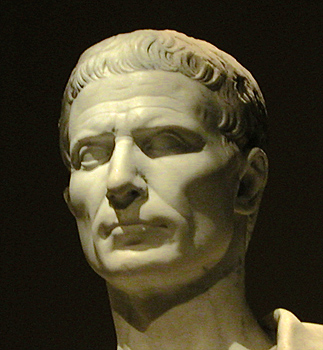
As most of you undoubtedly already know, according to the Roman calendar, the Ides take place every month on either the 15th (March, May, July and October) or the 13th (all others). The Ides of March are the most famous Ides because Julius Caesar was assassinated on the 15th of March, 44 BC.
National Public Radio seems to take the Ides of March pretty seriously, because they have quite a few streaming audio clips in their archives commemorating Caesar's demise.
- Ides of March After-Party: Roman Drinking Songs?
- Commemorate Caesar: Take a Deep Breath
- The Roots of Caesar Salad
- Brush Up Your Shakespeare
- Ides of March: A Condensed Version of Julius Caesar featuring Orson Welles, ca. 1938
Enjoy!
Photo courtesy of the Vroma Image Archive
Saturday, March 15, 2008
Pompeiiana!
For nearly twenty years Bernard Barcio produced Pompeiiana, a Latin language newspaper for students which was filled with articles, comics, puzzles and games. Bolchazy-Carducci Publishers has received exclusive rights to all 229 issues which they are planning to scan and make available online for Latin teachers worldwide. Other projects based upon Pompeiiana are also in the planning stages. As you would no doubt expect, the reaction of Latin teachers has been overwhelmingly positive!
Bolchazy-Carducci is asking Latin teachers for their help in locating 2 missing issues. Do you have them? Vol. 2, Issue 1 and Vol. 2, Issue 4. If so, Bolchazy-Carducci would love to hear from you!
Bolchazy-Carducci is asking Latin teachers for their help in locating 2 missing issues. Do you have them? Vol. 2, Issue 1 and Vol. 2, Issue 4. If so, Bolchazy-Carducci would love to hear from you!
Conversational Latin Language Videocasts
Colloquia Latina spectate et audite! The University of Kentucky's Division of Classics has placed a number of videocasts featuring fluent Latin speakers (including Terence Tunberg and Milena Minkova) on their website. Rumor has it that there are more to come!
Subscribe to:
Posts (Atom)